

Table of Contents
Moving ranks as one of life’s most stressful events, right alongside divorce and career changes. But here’s a secret that professional movers won’t always tell you upfront: every item you pack costs money—whether you’re moving across town in Portland or across the country.
For Portland homeowners preparing to relocate, there’s a critical step that happens before the moving truck arrives: a strategic pre-move cleanout. This isn’t just about tidying up—it’s about removing junk, broken furniture, and items you’ll never use again. The result? Significant savings on your moving bill, reduced stress, and a fresh start in your new home.
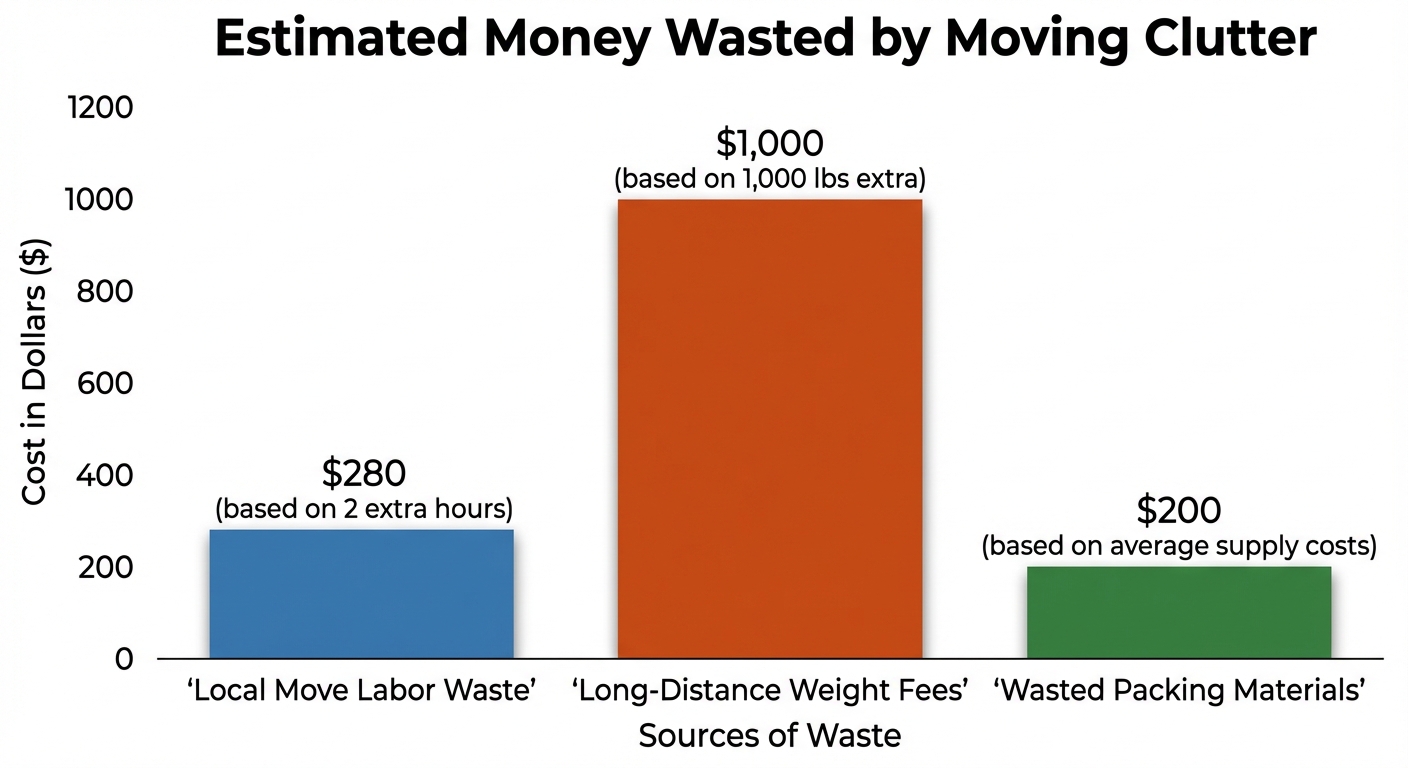
Consider this: Local movers in the Portland metro area charge between $90 and $140 per hour for a two-person crew. If your movers spend even two extra hours hauling items you plan to throw away at your destination, you’ve just wasted $200-$280. For long-distance moves, where costs are calculated by weight, eliminating just 1,000 pounds of clutter can save you $800-$1,000.
In this guide, we’ll break down exactly why decluttering before your move is one of the smartest financial decisions you can make—and how Smart Junk Removal PDX’s professional services fit perfectly into Portland’s sustainability-focused culture.
Every Pound and Every Hour Costs Money—Here’s the Math
Most people underestimate how moving costs are calculated. Whether you’re moving locally or long-distance, clutter directly impacts your final bill in ways that add up faster than you might expect.
Local Moves in the Portland Metro
Local movers charge by the hour, with rates ranging from $90-$140 per hour for standard two-person crews. This means every minute your movers spend handling items you don’t actually want becomes a direct expense on your final invoice.
The junk factor comes into play immediately. If you have a garage full of broken appliances, old furniture collecting dust, and boxes of outdated electronics, packing and loading these items wastes valuable moving time. Two hours spent moving junk equals $200-$280 in wasted labor costs. Consider a real-world example: A homeowner moving from Sellwood to Beaverton spent an extra 3 hours because movers had to navigate around debris and unwanted items—adding nearly $400 to their bill.
Long-Distance Interstate Moves
Interstate movers calculate costs based on shipment weight and distance traveled. The average 3-bedroom home weighs 9,000-10,000 pounds when fully packed. Here’s where the math gets really compelling: removing 1,000 pounds of clutter—equivalent to a sleeper sofa, old refrigerator, and several boxes of books—can reduce your moving costs by $800-$1,000.
Professional moving companies provide quotes based on weight estimates, but many homeowners receive surprise overage charges when their actual shipment weighs more than predicted. By decluttering first, you ensure the estimate matches reality and avoid those unwelcome financial surprises.
The Packing Materials Waste
Moving supplies for a typical 3-bedroom home cost between $200-$500. This includes boxes, bubble wrap, packing tape, and protective padding. Why waste these materials on items you’ll discard at your destination? Strategic decluttering ensures your packing investment protects belongings you actually value and want in your new space.
Decision Fatigue and the Mental Cost of Clutter

Moving isn’t just physically exhausting—it’s mentally draining. Clutter amplifies stress and undermines the “fresh start” you’re seeking in your new home. Understanding the psychological impact of moving with clutter can help you make better decisions about what to bring along.
The Scale of the Problem
The average American home contains approximately 300,000 items. When packing for a move, every single item requires a decision: Keep it? Pack it? Donate it? Throw it away? This constant decision-making creates what psychologists call “decision fatigue”—a deterioration in the quality of decisions after making many choices in succession.
As you pack room after room, your ability to make good choices about what truly deserves space in your new home diminishes. You start defaulting to “just pack it and sort it later,” which ultimately means you’re paying to move items you’ll eventually discard anyway.
How Professional Junk Removal Reduces Stress
By hiring Smart Junk Removal PDX to remove clearly defined junk—broken furniture, obsolete electronics, yard waste—before you start packing, you eliminate hundreds of micro-decisions. This leaves you with mental energy to focus on what truly matters: thoughtfully organizing belongings you’ll actually use in your new space.
Professional junk removal creates a clean slate. Instead of navigating around piles of debris while trying to pack, you’re working in an organized environment where every remaining item has earned its place in your move.
The Fresh Start Effect
Research from The Wharton School shows that major life transitions—like moving—create natural “fresh start” moments that motivate positive behavioral changes. These temporal landmarks give us psychological permission to leave old habits behind and embrace new patterns.
But here’s the catch: transporting old, broken, or unused items to your new home undermines this psychological reset. When you unpack boxes of clutter in your new space, you’re literally importing your old problems into what should be a fresh beginning. Starting fresh means starting clean—without the baggage (literally) of your old life weighing you down.
Clutter and Cortisol
Studies indicate that cluttered environments contribute to elevated cortisol levels—the hormone associated with stress. Moving to a new home should feel like a relief, not a continuation of chaos. When you declutter before moving, you ensure your new space feels organized and welcoming from day one, rather than immediately overwhelming you with unpacking decisions about items you never wanted to keep in the first place.
Navigating Portland’s Strict Disposal Rules and Sustainability Standards
Portland isn’t just any city—it’s a leader in environmental sustainability. Moving in the PDX metro area comes with unique waste disposal challenges and cultural expectations around recycling and donation that make professional junk removal particularly valuable.
The Environmental Impact of Moving
Americans generate over 12 million tons of furniture and furnishing waste annually, with the majority ending up in landfills. Portland residents take sustainability seriously, and improper disposal—like leaving furniture on the curb—is both illegal and socially unacceptable in many neighborhoods. The community standards here reflect a genuine commitment to environmental stewardship.
Oregon Metro’s 2030 Vision
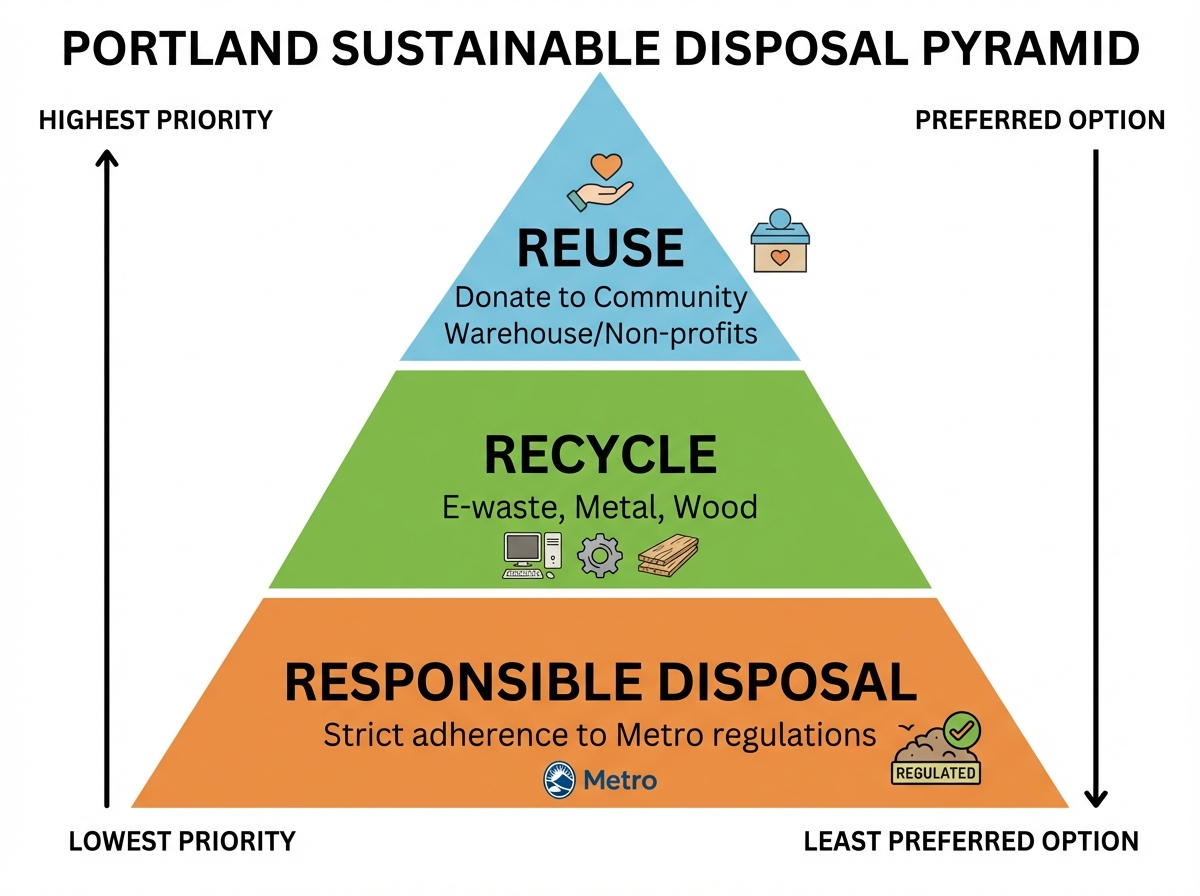
Oregon Metro, the regional government for Greater Portland, has set aggressive waste reduction and recycling targets as part of its vision for a sustainable future. Homeowners are expected to divert waste from landfills through donation, recycling, and proper disposal channels.
The challenge? Navigating Metro Central Transfer Station or recycling centers requires time, a suitable vehicle, and knowledge of complex sorting protocols. Different materials require different handling, and the penalties for improper disposal can be significant.
What Can’t Go in Your Curbside Bin
Portland has strict rules about residential waste collection that many homeowners don’t fully understand until they’re faced with a rejected pickup or a fine:
- Electronics (E-waste): Old TVs, computers, and printers are banned from standard bins and require specialized recycling
- Appliances: Refrigerators, washers, and dryers need special handling due to refrigerants and other potentially hazardous components
- Hazardous Materials: Paint, chemicals, and batteries must be disposed of at designated facilities
Violating these rules can result in fines and missed pickups, leaving you scrambling to find alternative disposal solutions during an already stressful moving period.
Why Smart Junk is the Solution
Smart Junk Removal PDX is licensed and experienced in handling Portland’s disposal logistics, taking this burden entirely off your shoulders. We maintain donation partnerships with local non-profits like Community Warehouse, which provides furniture to families transitioning out of homelessness. Items in good condition find new homes rather than taking up landfill space.
Our recycling expertise ensures materials like metal, wood, and electronics are properly sorted and recycled according to Portland’s standards, not simply dumped. And the convenience factor cannot be overstated: no need to rent a truck, navigate transfer stations, or wait in lines. Smart Junk handles the heavy lifting and logistics—literally.
Cultural Fit
Portland homeowners value eco-conscious services. Using a professional junk removal company isn’t just practical—it aligns with the city’s identity and values. When you hire Smart Junk, you’re not just making your move easier; you’re participating in the community’s commitment to environmental responsibility.
What’s Really Cheaper? Breaking Down Your Options
Many homeowners assume DIY junk disposal saves money. But when you factor in time, physical effort, vehicle costs, and disposal fees, professional junk removal often delivers better value—and definitely better outcomes.
Comparing Your Options
| Feature | Professional Junk Removal (Smart Junk) | DIY Disposal (Hauling to Dump) | Moving the Junk (Sort Later) |
|---|---|---|---|
| Cost | Upfront fee, but reduces moving costs significantly | Truck rental ($80-$150) + Dump fees ($40-$100) + Fuel | High: Increased mover hours ($200-$400+) & interstate weight fees ($800-$1,000) |
| Time Investment | Low (1-2 hours onsite) | High (4-6 hours: loading, driving, queuing, unloading) | Moderate-to-High (packing/unpacking items you don’t need) |
| Physical Effort | None (hands-off service) | High (risk of injury from heavy lifting) | High (loading/unloading repeatedly) |
| Sustainability | High (donation/recycling prioritized) | Variable (depends on facility chosen) | Low (deferred decisions often lead to landfill disposal) |
| Stress Level | Low | High | High (clutter follows you to your new home) |
A Real-World Cost Comparison
A homeowner in Lake Oswego considered renting a U-Haul truck to haul old furniture to the dump. Let’s break down the actual costs:
DIY Cost Breakdown:
- Truck rental: $120
- Metro Central Transfer Station disposal fee: $75
- Fuel: $30
- Time spent (5 hours): Priceless stress and physical exhaustion
- Total DIY Cost: ~$225 plus significant physical labor and the risk of injury
Smart Junk Cost: $250-$350 for professional removal, sorting, donation coordination, and recycling—with zero effort required from you. When you add in the value of your time and the reduced stress, professional removal is clearly the superior investment.
The Hidden Cost of “I’ll Sort It Later”
Many people pack junk with good intentions, telling themselves they’ll sort through everything after the move. Here’s the reality check: Boxes labeled “Miscellaneous” rarely get unpacked. Instead, they sit in garages gathering dust or end up in storage units costing $100-$200 per month.
You’ve now paid twice—once to move the items you don’t want, and again to store them indefinitely. Eventually, most of these items get thrown away anyway, meaning you wasted money at every step of the process. Breaking this cycle starts with making disposal decisions before the move, not after.
When to Declutter: A 6-Week Timeline for Maximum Savings
Timing your junk removal strategically ensures you maximize cost savings and minimize stress. Here’s a proven timeline that helps Portland movers stay organized and in control throughout the relocation process.
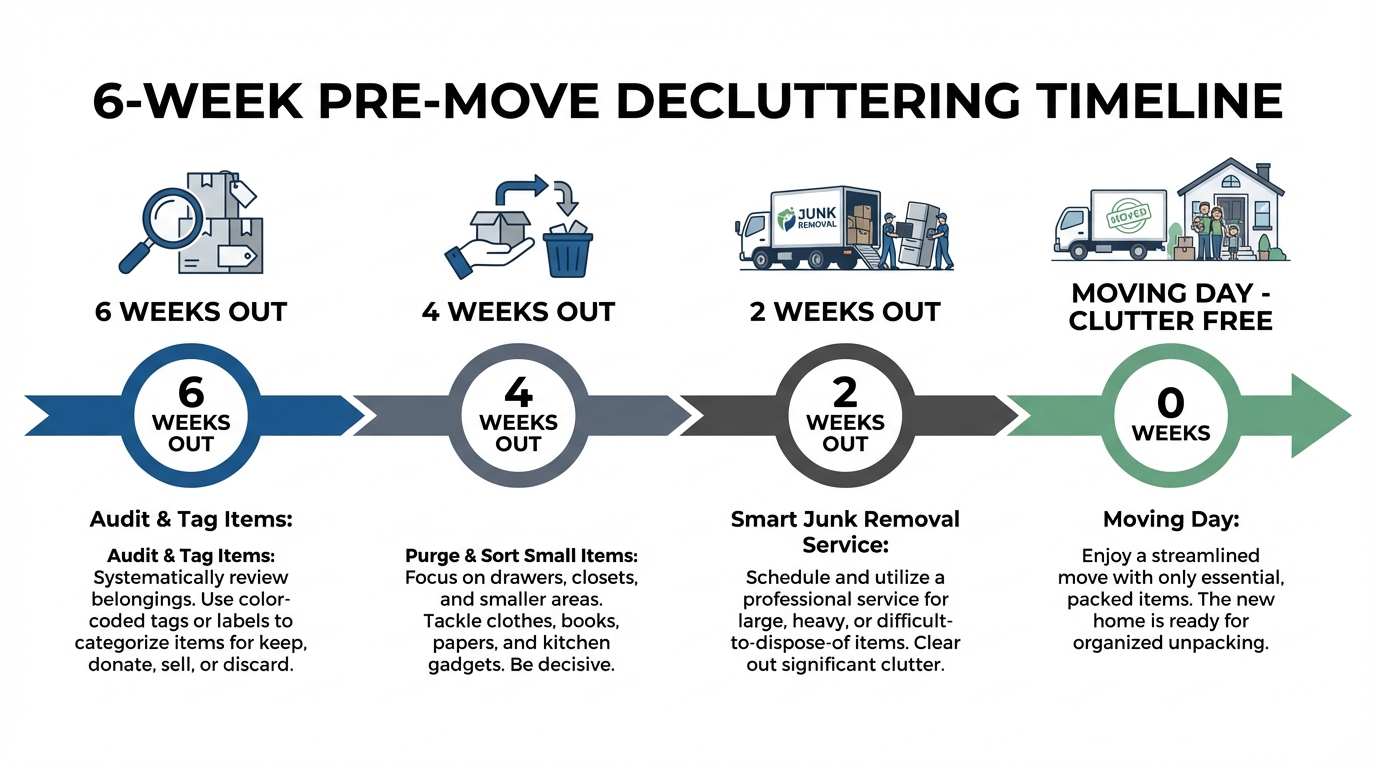
6 Weeks Before Moving: The Audit
Start with a comprehensive walkthrough of every room, garage, attic, and basement. Your goal is to identify large items that will not fit or match your new home’s layout. Common culprits include:
- Oversized furniture that won’t fit through narrower doorways or hallways
- Broken appliances you’ve been meaning to replace
- Exercise equipment gathering dust in the corner
- Yard debris, old lumber, or construction materials taking up space
Create a designated “Junk Pile” in your garage or spare room. Having a central location makes it easier to visualize the volume of items you’re removing and simplifies the pickup process later.
4 Weeks Before Moving: The Purge
Now tackle smaller categories systematically: clothes, books, kitchenware, toys, electronics. Apply the “One-Year Rule”—if you haven’t used something in a year, it’s a strong candidate for removal or donation.
Consider hosting a garage sale or listing items on Facebook Marketplace, but set a firm deadline. Anything unsold by Week 3 goes to Smart Junk. Don’t let the selling process delay your decluttering—it’s easy to get stuck trying to squeeze every dollar out of old belongings while the moving date approaches rapidly.
2 Weeks Before Moving: The Removal
This is the optimal time to schedule Smart Junk for junk removal. Having everything removed before packing begins ensures:
- Movers only handle items you’re actually keeping
- Packing materials are used efficiently on things that matter
- Your home feels cleaner and more organized during the final packing push
- You can focus on careful packing rather than navigating around debris
The psychological benefit of this timing cannot be overstated. Walking into a clutter-free space during those final hectic weeks before moving day provides a sense of control and progress when everything else feels chaotic.
Moving Day: The Payoff
Your home is clutter-free, allowing movers to work faster and more safely. Without obstacles to navigate around, they can complete the job in less time, directly reducing your labor costs. The result is a smoother move overall, with fewer opportunities for damaged belongings or injuries.
Final Thoughts
Moving is expensive, exhausting, and emotionally overwhelming—but it doesn’t have to be. By decluttering before your movers arrive, you take control of your relocation costs, reduce stress, and set yourself up for a genuine fresh start in your new home.
Whether you’re moving across Portland or across the country, the math is clear: every item you don’t move saves you money. Local moves save on hourly labor costs. Long-distance moves save on weight-based shipping fees. And in both cases, you avoid wasting packing materials on items destined for the dump.
For Portland homeowners, there’s an added benefit: professional junk removal aligns with the city’s sustainability values. Smart Junk Removal PDX ensures your unwanted items are donated to local charities, recycled responsibly, or disposed of in compliance with Oregon Metro’s strict environmental standards. You’re not just making your move easier—you’re participating in Portland’s commitment to environmental stewardship.
The strategic approach outlined in this guide—auditing at 6 weeks, purging at 4 weeks, and removing junk at 2 weeks before your move—gives you the structure needed to make smart decisions during a hectic time. Instead of decision fatigue overwhelming you as moving day approaches, you’ll feel organized and in control.
Ready to make your move easier and more affordable? Contact Smart Junk Removal PDX today to schedule your pre-move cleanout. Let us handle the heavy lifting—so you can focus on the excitement of your new beginning.
Ready to Simplify Your Move?
Contact Smart Junk Removal PDX today and start your stress-free relocation journey.
References:
- Move.org. (2024). The Average Cost of Moving
- Moving.com. (2024). How to Estimate Moving Costs
- Angi. (2024). How Much Do Moving Boxes Cost?
- LA Times. (2014). 300,000 items in the average American home
- Dai, H., Milkman, K. L., & Riis, J. (2014). The Fresh Start Effect: Temporal Landmarks Motivate Aspirational Behavior. The Wharton School
- U.S. Environmental Protection Agency (EPA). (2023). Durable Goods: Product-Specific Data
- Federal Motor Carrier Safety Administration (FMCSA). (2024). Protect Your Move