
Table of Contents
- It Weighs More Than You Think: The Physics Behind Hot Tub Injuries
- 220 Volts of Hidden Danger: Why Hot Tub Electrical Systems Are Life-Threatening
- Legionella, Mold, and Bacteria: The Invisible Health Threats Lurking in Old Hot Tubs
- Reciprocating Saws and Flying Fiberglass: Why Hot Tub Demolition Is More Dangerous Than Construction Work
- Why You Can’t Just Haul It to the Dump: Navigating Metro Portland’s Disposal Requirements
- Why Smart Junk’s Professional Approach Saves Money, Time, and Your Health
- Final Thoughts
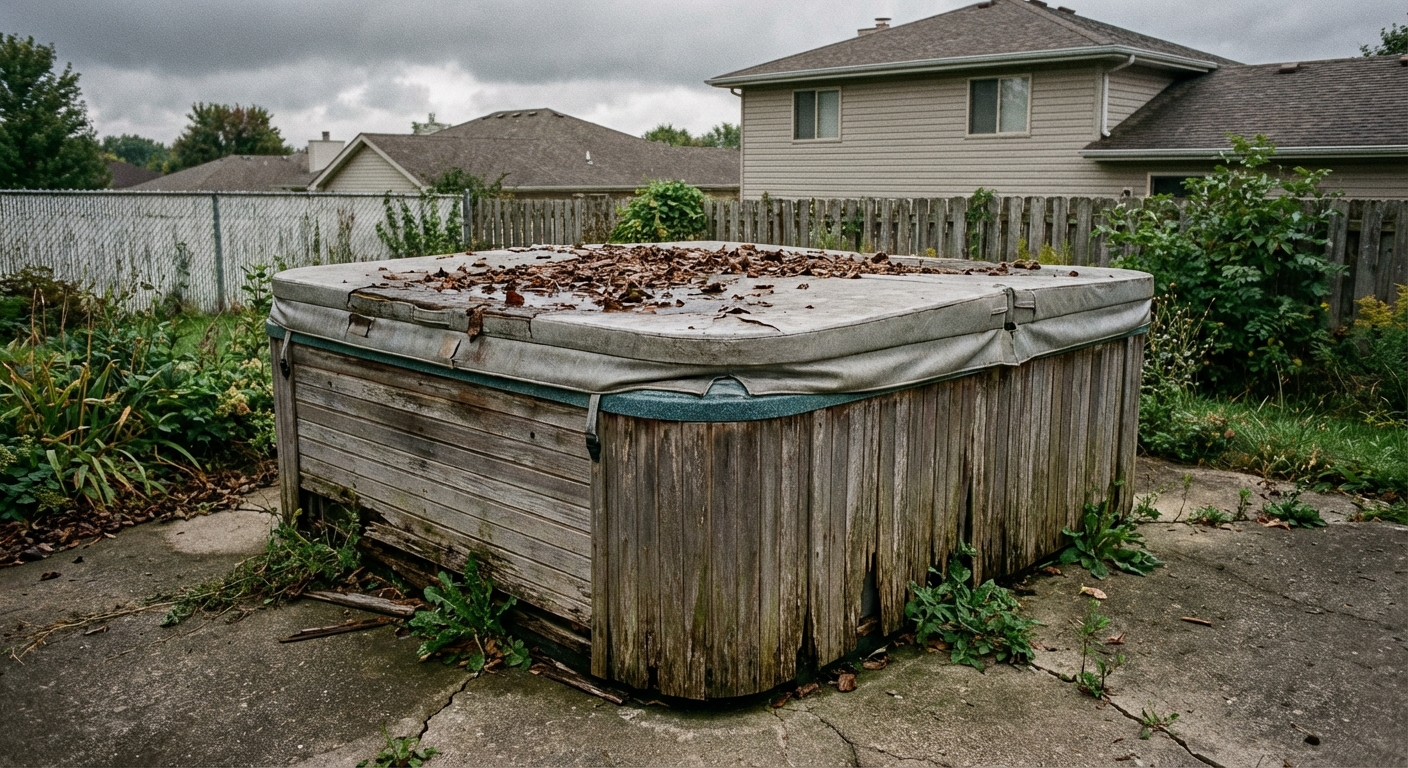
When that aging hot tub in your backyard becomes more of an eyesore than an oasis, the temptation to tackle its removal yourself can be strong. After all, how hard could it be to haul away what looks like just another piece of outdoor furniture? The reality is far more dangerous. That seemingly simple weekend project involves high-voltage electrical systems, hundred-pound components, and biological hazards that most homeowners never anticipate. According to the Bureau of Labor Statistics, musculoskeletal disorders account for 33% of all worker injury cases, and DIY hot tub removal is a prime contributor to this statistic. For Portland and Vancouver area residents, the risks extend beyond personal injury. Local disposal regulations, hidden electrical hazards, and dangerous pathogens lurking in stagnant water can transform a cost-saving measure into an expensive—and potentially dangerous—mistake. This comprehensive guide explores the real dangers of DIY hot tub removal and explains why professional services like Smart Junk Removal PDX aren’t just convenient—they’re essential for protecting your health, your property, and your wallet.
It Weighs More Than You Think: The Physics Behind Hot Tub Injuries
Understanding the true weight and structural complexity of hot tubs reveals why manual removal is far more dangerous than it appears. An average 4-6 person hot tub weighs 500-1,000 pounds empty, with weight unevenly distributed due to motors, pumps, and heaters concentrated on one side. But that’s just the starting point. Trapped water in internal plumbing adds significant hidden weight—water weighs 8.34 pounds per gallon—making the actual load unpredictable and far heavier than most homeowners expect. The National Institute for Occupational Safety and Health Revised Lifting Equation indicates that hot tubs exceed safe manual lifting parameters due to their bulk and awkward dimensions. The compression forces on the lumbar spine during lifting create severe injury risk, particularly when multiple people attempt to coordinate lifting an unwieldy, unbalanced load. What seems like a simple “get some buddies to help” project often results in emergency room visits for back injuries, hernias, or acute muscle tears. Unlike professional teams who use mechanical leverage tools, hot tub sleds, and proper rigging equipment, DIY attempts rely on raw strength—a recipe for injury.
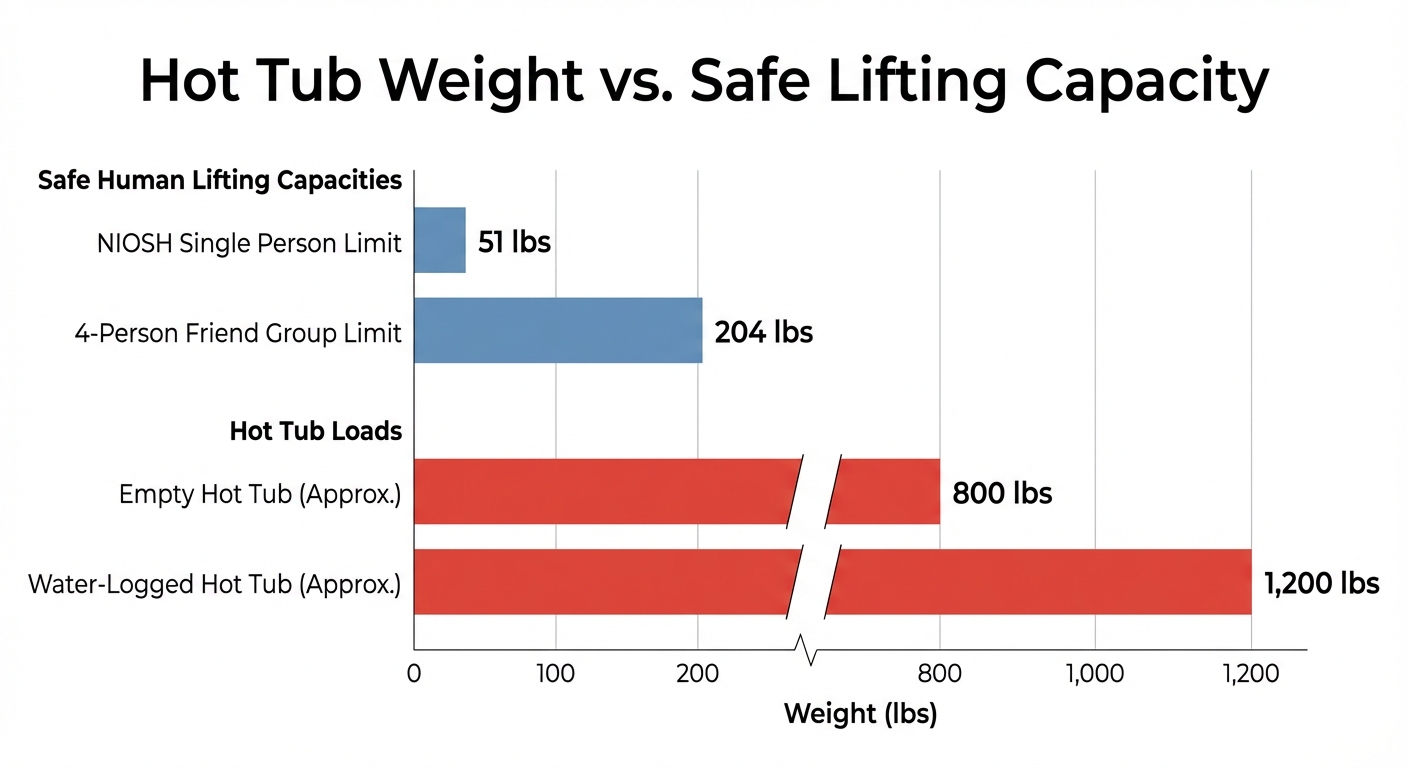
This chart illustrates the stark difference between NIOSH’s recommended safe lifting limits and the actual weight of a typical hot tub. Even when divided among four people, each person would be lifting well beyond the recommended maximum—and that’s assuming perfect weight distribution, which never happens in real-world scenarios.
220 Volts of Hidden Danger: Why Hot Tub Electrical Systems Are Life-Threatening
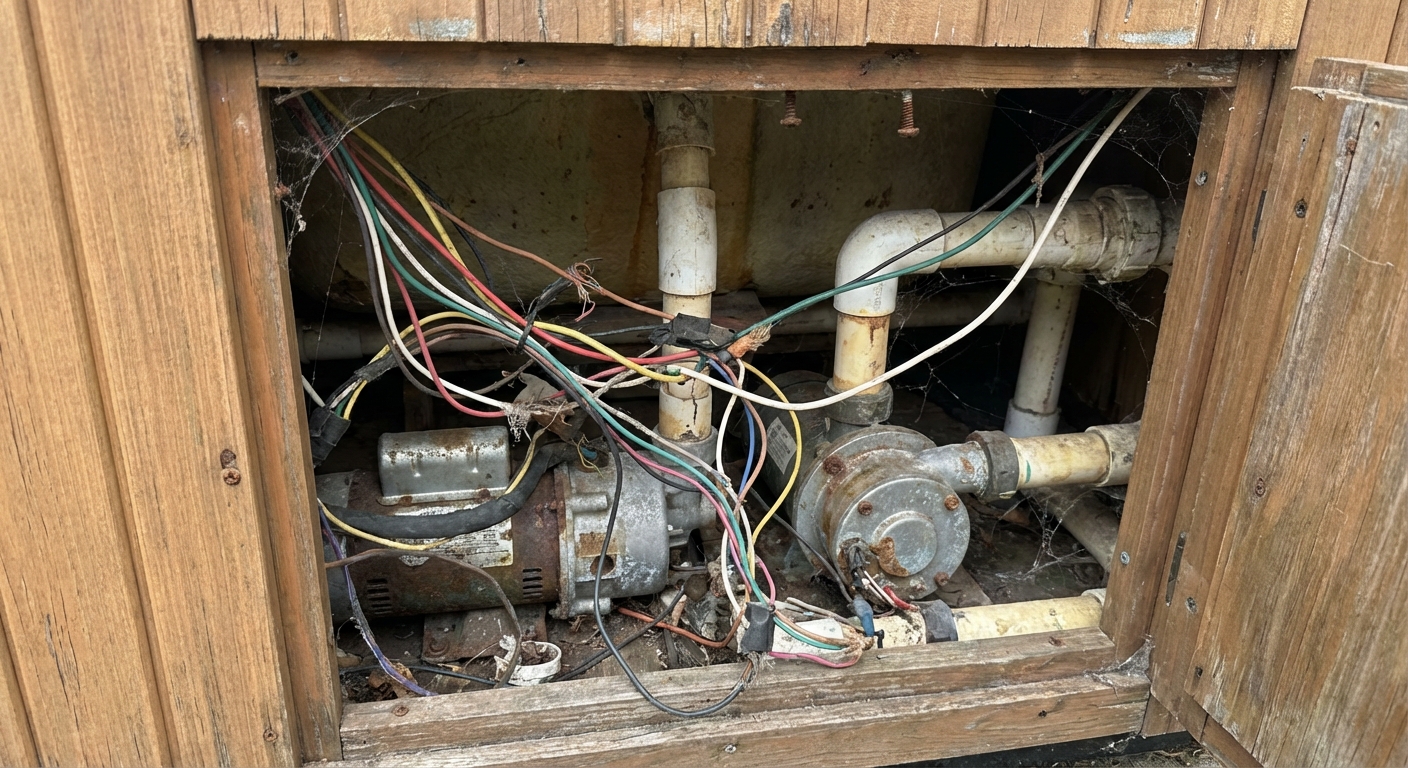
Hot tubs operate on high-voltage dedicated circuits that remain dangerous even after the power appears to be disconnected. Unlike standard 120V appliances, most permanent hot tubs are hardwired to 220V-240V circuits carrying 50-60 amps—enough to cause fatal electrocution. This is not the same as unplugging your toaster. These systems require specialized knowledge to disconnect safely.
⚠️ Critical Warning: The “Live Wire” Mistake
Homeowners often assume power is off when the circuit breaker may still be engaged, or they misidentify the correct circuit in the electrical panel. The consequences can be deadly. Water amplifies this risk significantly. Demolition releases trapped water from plumbing systems, and the combination of high voltage and water is a primary cause of electrocution deaths in home maintenance scenarios.
The Electrical Safety Foundation International reports that electrical malfunctions cause more than 43,900 home fires annually. Hot tub removal adds another dimension to this risk. Here’s a danger most people never consider: the capacitor trap. Even after disconnecting power, capacitors in the spa’s motor and control board retain lethal electrical charges—a hazard invisible to untrained individuals. You could have the breaker off for hours and still be at risk of electrocution when cutting into the control panel. Professional removal teams follow Lockout/Tagout procedures to ensure zero energy state before beginning work, a safety protocol most homeowners have never heard of. This systematic approach verifies that all energy sources are isolated and cannot be accidentally re-energized during the removal process.
⚡ Nightmare Scenario
Consider this: you’re cutting into a hot tub cabinet with power tools while standing in water released from the plumbing. This creates a perfect electrocution pathway—your body becomes the ground, and the stored electrical energy finds its way through you. It’s a scenario that professional teams are trained to prevent.
Legionella, Mold, and Bacteria: The Invisible Health Threats Lurking in Old Hot Tubs
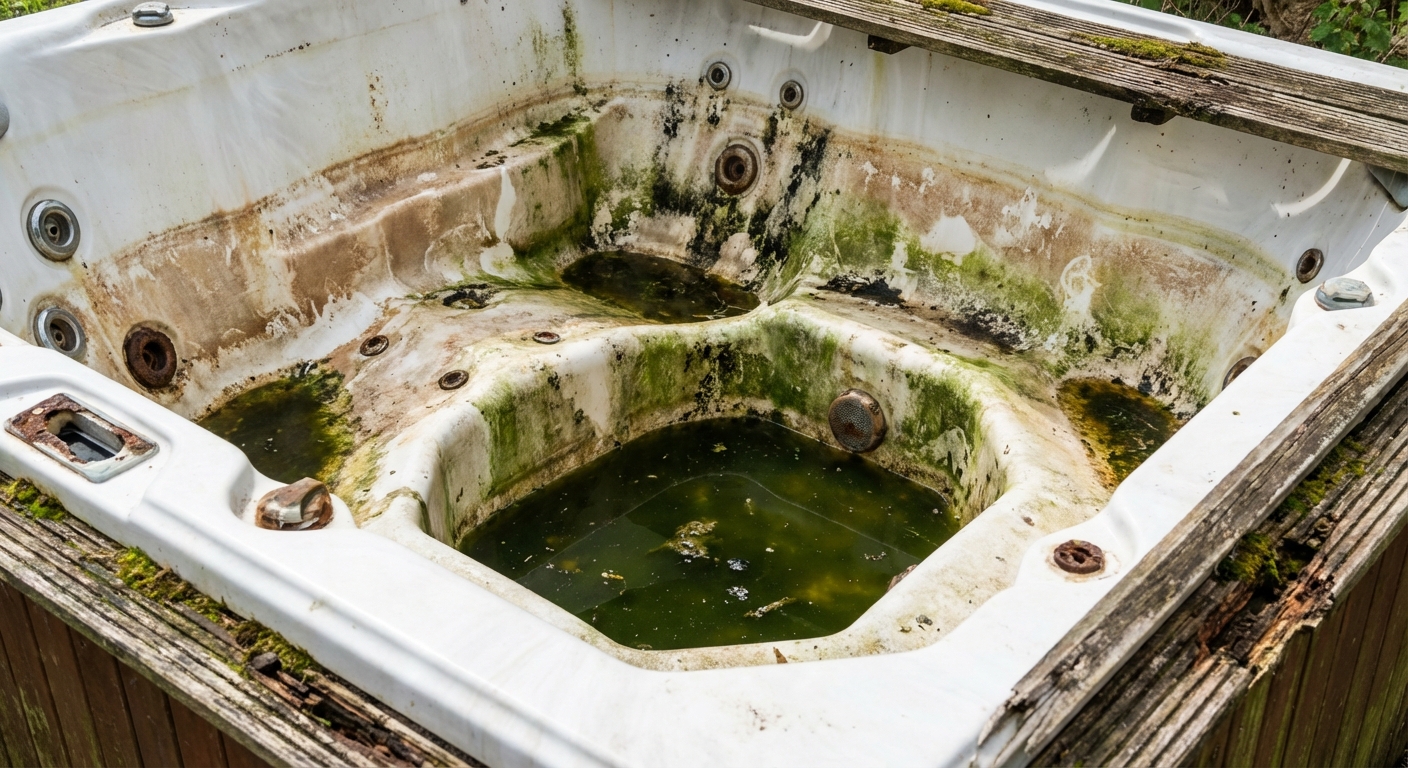
Abandoned hot tubs become breeding grounds for dangerous pathogens that pose serious health risks during demolition. Those “dead legs” in the plumbing—areas where water sits for months or years—create ideal conditions for bacterial growth. The warm, moist environment of a neglected hot tub is essentially a petri dish for some of the most dangerous waterborne pathogens.
The Biological Threats
Legionella bacteria is one of the most serious threats. The CDC identifies hot tubs as common sources for Legionella, which causes Legionnaires’ disease—a severe, sometimes fatal form of pneumonia. This isn’t a theoretical risk; outbreaks have been traced to abandoned hot tubs that seemed harmless from the outside. Pseudomonas aeruginosa causes “hot tub rash” and can lead to serious skin and ear infections. When pipes are cut during demolition, aerosolized mist containing these bacteria can be inhaled, leading to respiratory infections that may not appear until days after exposure. Black mold grows in the wooden frame and skirting of old hot tubs, often hidden from view until demolition begins. Stachybotrys chartarum, commonly known as toxic black mold, releases harmful spores when disturbed during removal. These spores can cause severe respiratory reactions, especially in individuals with allergies or compromised immune systems.
Exposure Routes During DIY Removal
- Direct contact with contaminated water as you drain and cut the plumbing
- Inhalation of aerosolized bacteria when sawing through water-filled pipes
- Mold spore release when demolishing rotted wooden components
- Skin contact with contaminated surfaces during the lifting and hauling process
Unlike professional services that use proper PPE including respirators, protective gloves, and full-coverage clothing, homeowners typically work with minimal protection—perhaps just work gloves and a dust mask from the hardware store. This inadequate protection leaves them vulnerable to every pathogen lurking in that old tub. What starts as a weekend project can result in respiratory infections, skin conditions, or serious pneumonia requiring hospitalization. The medical costs alone can far exceed what you would have paid for professional removal.
Reciprocating Saws and Flying Fiberglass: Why Hot Tub Demolition Is More Dangerous Than Construction Work
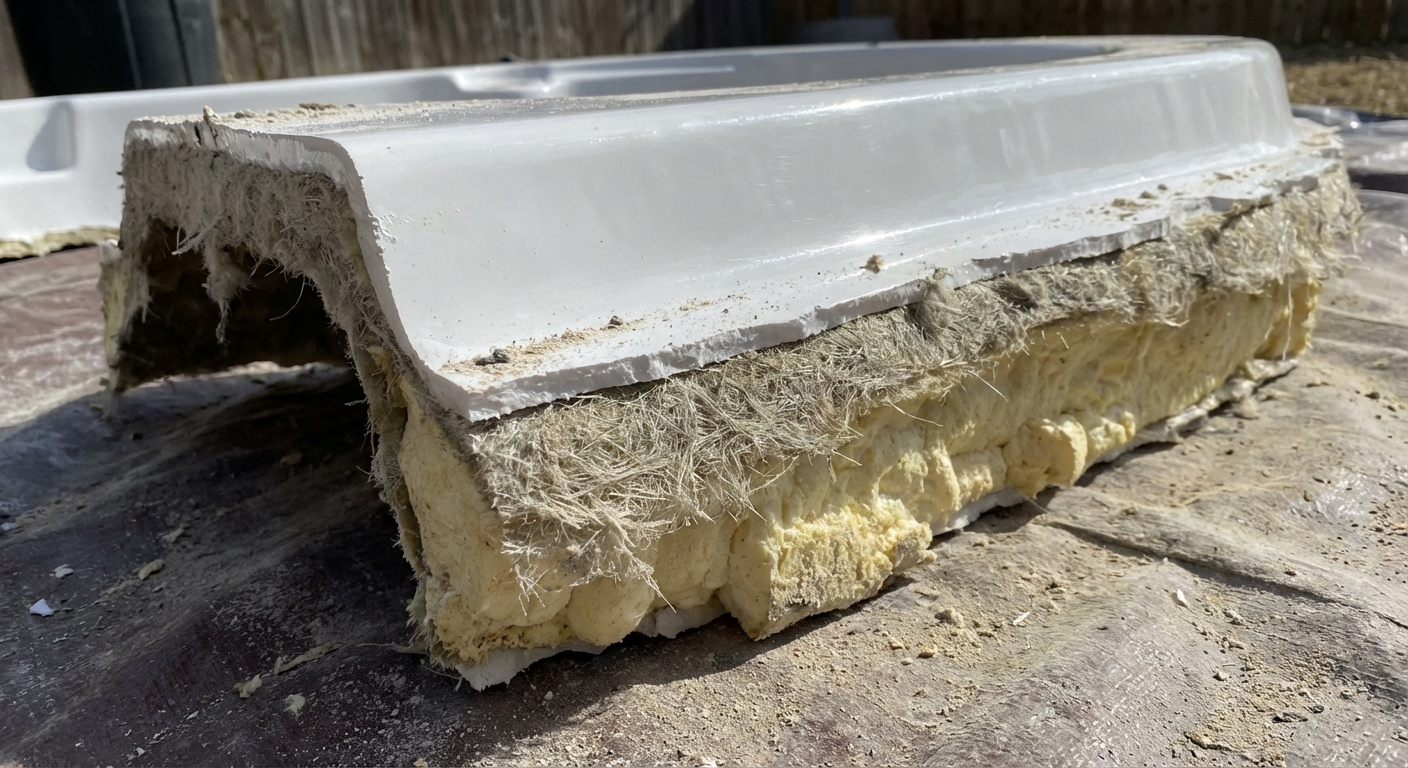
Cutting apart a hot tub requires specialized techniques and tools that create multiple injury hazards for untrained operators. Hot tubs are too large to remove whole from most backyards, requiring demolition into transportable sections. This is where the danger escalates dramatically.
Power Tool Hazards
Reciprocating saws (commonly called Sawzalls) are the tool of choice, but they present serious hazards in hot tub demolition. Cutting through thick acrylic reinforced with fiberglass and wood framing causes blade binding and violent kickback. Hidden steel supports and fasteners can catch blades unexpectedly, causing loss of control at the worst possible moment. According to the Journal of Trauma and Acute Care Surgery, power saws are responsible for over 30,000 emergency room visits annually in the United States. Hot tub removal contributes significantly to this statistic.
🛡️ Professional Safety Protocols
Professional teams know exactly where to cut to avoid structural hazards, use proper dust containment systems, and wear full protective equipment including face shields, heavy-duty gloves, and protective clothing. They understand the construction of these units and can anticipate where hidden hazards lie.
Fiberglass and Acrylic Dangers
Fiberglass dust exposure is another serious concern. The cutting process creates fine fiberglass particles that irritate eyes, skin, and the respiratory system. Proper abatement requires HEPA filtration and respiratory protection—equipment most homeowners don’t own and wouldn’t know how to use correctly even if they did. The brittle acrylic shell presents yet another danger. As hot tubs age, acrylic becomes increasingly brittle. Sledgehammer demolition causes shells to shatter into razor-sharp shards similar to broken glass. Laceration injuries to hands, arms, and legs are common when inexperienced individuals attempt this work without proper safety equipment and technique. The false economy of DIY becomes apparent when you calculate the cost of renting specialized tools, purchasing protective equipment you’ll use once, and potential medical expenses from injuries. These costs often exceed professional removal fees—and that’s before accounting for the value of your time and the risk to your health.
Why You Can’t Just Haul It to the Dump: Navigating Metro Portland’s Disposal Requirements
Local regulations and logistical challenges make proper hot tub disposal more complex and expensive than most homeowners anticipate. Let’s be clear: curbside pickup won’t work. Municipal trash services in Portland and Vancouver will not pick up items of this size or weight, period. You’re on your own to get it to a proper disposal facility.
Metro Transfer Station Requirements
Metro Central Transfer Station has specific requirements that many homeowners discover only after arriving with an improperly prepared load:
- You must secure loads according to strict guidelines; improper securing results in fines and potential liability if materials fall off your vehicle during transport
- Materials must often be separated: metal components like motors and heaters go to recycling, while fiberglass shells go to the landfill
- Showing up with everything mixed together means you’ll be sorting in the parking lot—a time-consuming and frustrating process
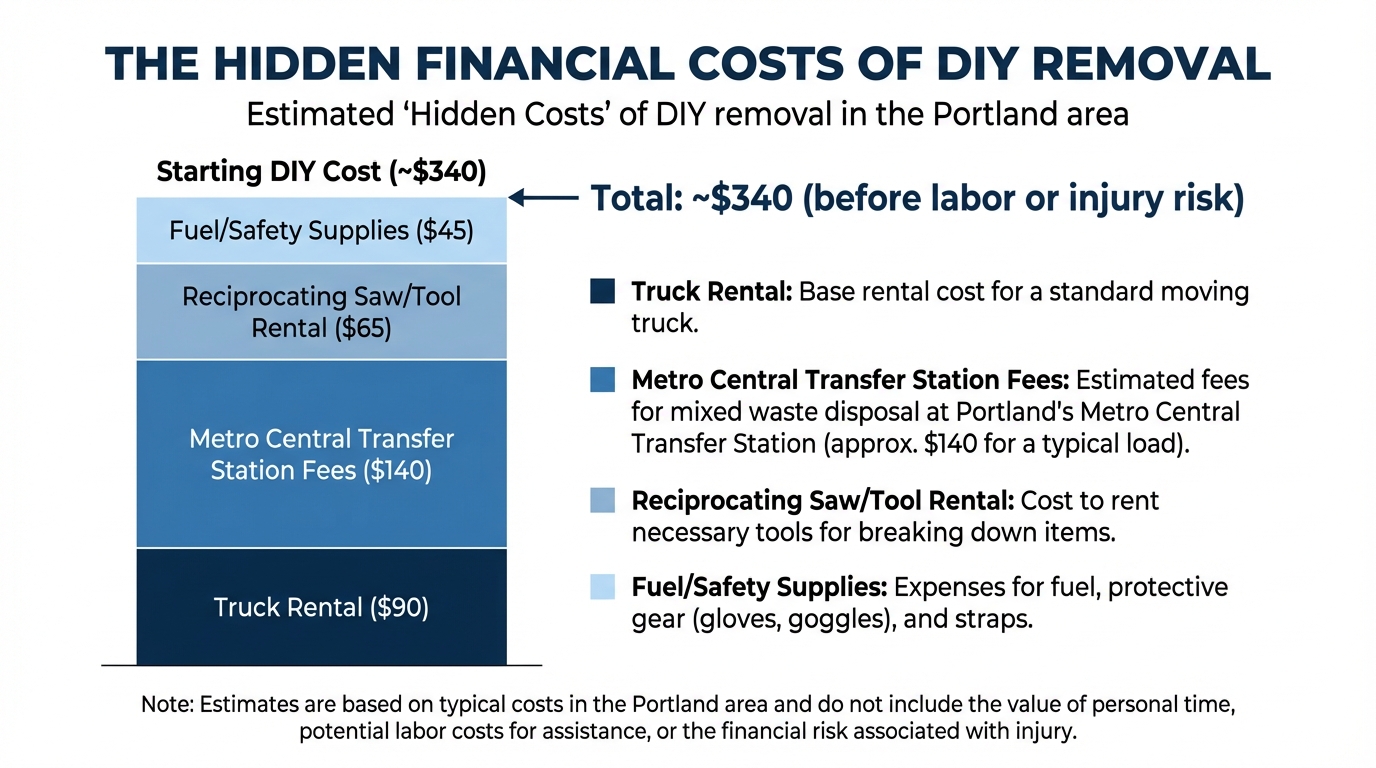
This breakdown reveals the true cost of DIY hot tub removal. What appears to be a money-saving approach quickly becomes more expensive than hiring professionals once you account for all the hidden expenses.
Vehicle and Transportation Challenges
Vehicle limitations create additional challenges:
- Standard pickup truck beds often aren’t long enough to accommodate a hot tub, even when cut into sections
- The weight can damage suspension systems, brake systems, and truck beds of non-commercial vehicles—repairs that can cost thousands of dollars
- Unsecured load violations on Oregon and Washington highways carry heavy fines and liability risks
- If debris falls from your vehicle and causes an accident, you’re financially and legally responsible
E-waste complications add another layer of complexity. Control panels and electronic components are classified as e-waste and require separate disposal from structural materials. Many transfer stations won’t accept these mixed loads at all.
The Hidden Cost Calculation
| Expense Category | Cost Range |
|---|---|
| Truck rental or vehicle damage repairs | $150-$500 |
| Dump fees at Metro facilities | $75-$150 |
| Fuel costs for multiple trips | $40-$80 |
| Tool rentals (saws, protective equipment) | $100-$200 |
| Time investment (often 1-2 full days) | Priceless |
| TOTAL (excluding time & injury risk) | $365-$930 |
The total often exceeds professional removal costs without accounting for injury risk, and that’s assuming everything goes smoothly—which it rarely does.
Why Smart Junk’s Professional Approach Saves Money, Time, and Your Health
Professional hot tub removal eliminates all risks while providing faster, more cost-effective results than DIY attempts. Smart Junk Removal PDX’s comprehensive service approach addresses every challenge and danger outlined in this article.
Safe Electrical Disconnection
Licensed professionals safely disconnect high-voltage systems following Lockout/Tagout protocols, ensuring zero risk of electrocution during the removal process.
Expert Demolition
Our team uses specialized cutting tools and techniques that minimize dust, noise, and injury risk. We know exactly where to cut, which components contain hazardous materials, and how to contain everything properly during the dismantling process.
Efficient Removal with Commercial Equipment
What takes a DIY crew 1-2 full days of backbreaking work, our 2-person specialized team completes in 1-2 hours using hot tub sleds, proper rigging equipment, and commercial-grade hauling trucks.
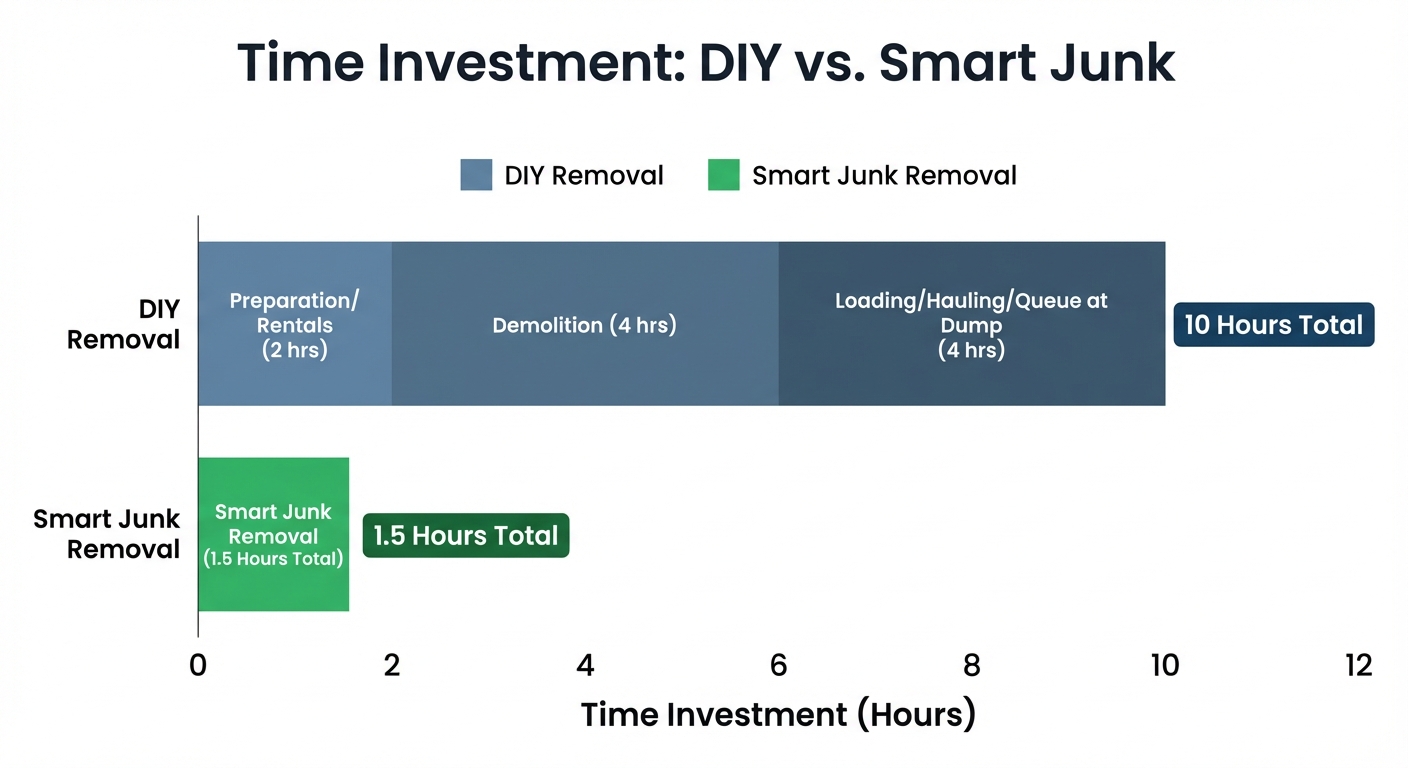
The time savings alone make professional removal worthwhile. Instead of sacrificing your entire weekend—and possibly the following week recovering from injuries—you can have the job completed in a few hours while you focus on more important things.
Complete Regulatory Compliance
Smart Junk Removal PDX manages all disposal sorting and documentation, ensuring materials are properly recycled or disposed of according to Metro Portland regulations. E-waste and recyclable metals are separated appropriately, and you never have to worry about fines or rejected loads.
Insurance and Liability Protection
Our professional teams are bonded and insured. Property damage or injuries are covered—unlike DIY where you bear all risk personally and through your homeowner’s insurance.
Environmental Responsibility
We ensure:
- Eco-friendly sorting for maximum recycling
- Proper hazardous material handling for chemicals and e-waste
- Responsible disposal—not just dumping at the cheapest location
Transparent Pricing
Our single quoted price includes labor, disposal, and hauling with no hidden fees or surprise dump charges. Often, our total cost is comparable to or less than total DIY costs when all expenses are factored in—especially when you consider the value of your time and the elimination of injury risk.
Convenient Service Areas
Same-day service availability throughout the Portland, Beaverton, Gresham, Hillsboro, and Vancouver metro areas means you can schedule removal at your convenience and have it completed quickly, not dragging on for weeks while you gather equipment and recruit help.
Final Thoughts
That old hot tub in your backyard represents far more than a simple disposal challenge. Between the 33% injury rate associated with heavy manual labor, the life-threatening electrical hazards of 220V systems, and the biological dangers of Legionella and toxic mold, the risks of DIY removal far outweigh any perceived savings. For Portland and Vancouver area homeowners, the logistical complexities add another layer of difficulty. Between Metro disposal regulations, vehicle requirements, and proper material separation, what seems like a straightforward project becomes a multi-day ordeal fraught with hidden costs and dangers. Smart Junk Removal PDX’s professional hot tub removal service eliminates every one of these risks. Our trained teams handle electrical disconnection safely, demolish units efficiently with proper protective equipment, and ensure full regulatory compliance with Oregon Metro and Washington Department of Ecology standards—all while completing the job in a fraction of the time a DIY attempt would require.
Ready to Remove Your Hot Tub Safely?
Don’t risk your health, your property, or your wallet on a dangerous DIY project.
Contact Smart Junk Removal PDX today for fast, safe, and affordable hot tub removal throughout the Portland-Vancouver metro area.
References:
- Bureau of Labor Statistics. (2023). Occupational Injuries and Illnesses resulting in Musculoskeletal Disorders (MSDs). https://www.bls.gov/iif/nonfatal-injuries-and-illnesses-tables.htm
- HomeAdvisor. (2024). How Much Do Hot Tubs Weigh? https://www.homeadvisor.com/r/hot-tub-weight-calculation/
- National Institute for Occupational Safety and Health (NIOSH). (2021). Applications Manual for the Revised NIOSH Lifting Equation. https://www.cdc.gov/niosh/docs/94-110/default.html
- Electrical Safety Foundation International (ESFI). (2023). Home Electrical Fires. https://www.esfi.org/home-safety/home-electrical-fires/
- Centers for Disease Control and Prevention (CDC). (2022). Legionella (Legionnaires’ Disease and Pontiac Fever): Hot Tubs. https://www.cdc.gov/legionella/wmp/control-toolkit/hot-tubs.html
- Centers for Disease Control and Prevention (CDC). (2023). Pseudomonas aeruginosa in Healthcare Settings. https://www.cdc.gov/hai/organisms/pseudomonas.html
- National Institutes of Health (NIH) / PubMed. (2018). Table saw injuries: Epidemiology and a proposal for preventive measures. https://pubmed.ncbi.nlm.nih.gov/29668582/
- Oregon Metro. (2024). Metro Central Transfer Station: Rates and Accepted Items. https://www.oregonmetro.gov/tools-living/garbage-and-recycling/metro-central-transfer-station