
Table of Contents
- What’s Really Hiding in That Pile of Drywall and Old Flooring?
- The Hidden Cost of “Saving Money”: Injuries, Back Pain, and Emergency Room Visits
- Portland’s C&D Waste Rules Are No Joke—Here’s What You Need to Know
- The True Cost Comparison: Time, Safety, and Hidden Fees
- Beyond Convenience: The Environmental and Health Case for Professional Haulers
- Key Takeaways
Home renovation projects are booming across the Portland Metro area. Whether you’re knocking down walls to create an open-concept kitchen, replacing old flooring, or updating your bathroom, there’s an undeniable thrill in transforming your living space into something that truly reflects your style and needs.
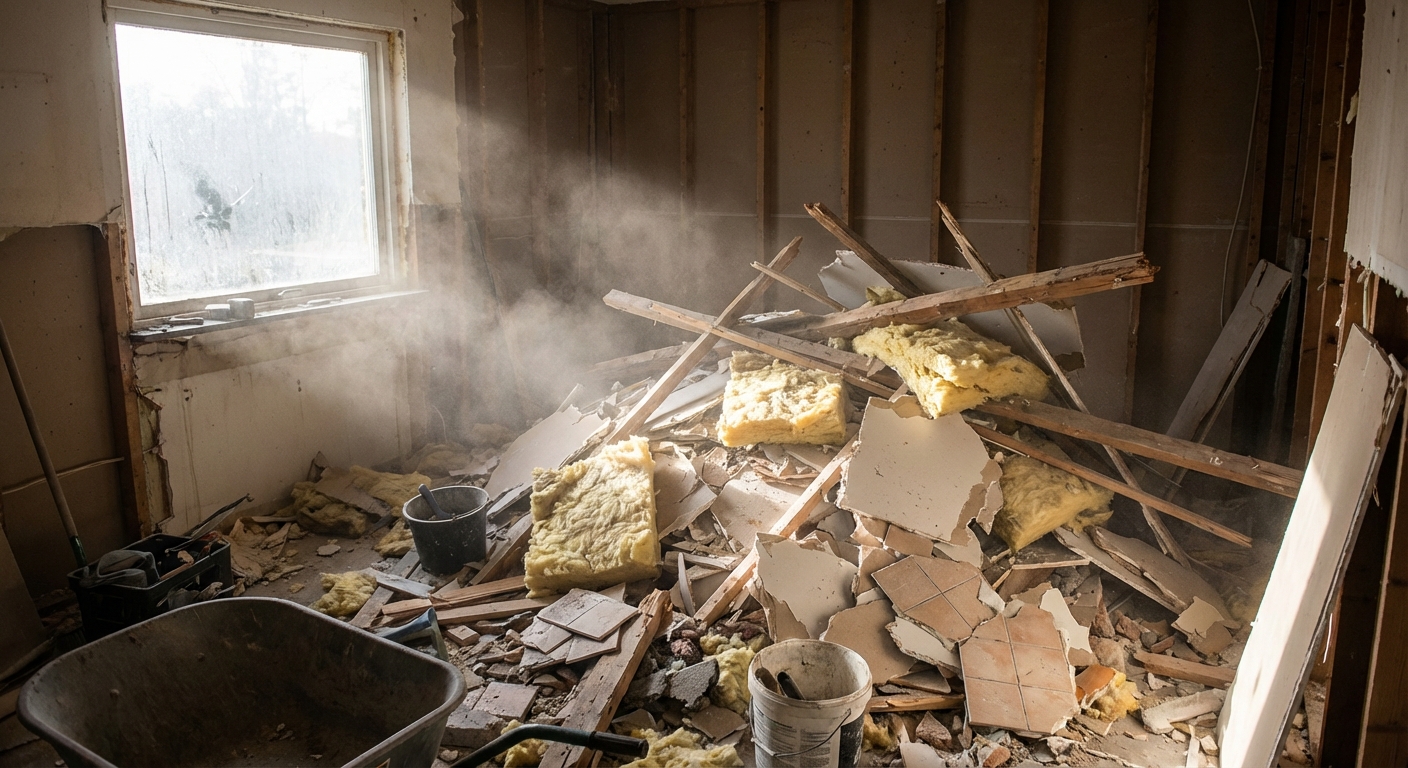
But here’s what most homeowners don’t realize until they’re knee-deep in demolition: construction and demolition (C&D) debris is NOT just “trash.”
That pile of drywall, old flooring, and splintered lumber sitting in your driveway? It could contain hazardous materials like silica dust, lead paint, and asbestos—substances that pose serious health risks to you and your family. And if you’re thinking about renting a dumpster or hauling it yourself to save money, you might be exposing yourself to respiratory hazards, physical injuries, and regulatory violations that can result in fines exceeding $25,000.
This guide will walk Portland and Vancouver homeowners through the hidden dangers of renovation debris, the strict Pacific Northwest regulations you need to know about, and why professional junk removal services like Smart Junk Removal PDX are the safest, most efficient choice for handling your construction waste responsibly.
What’s Really Hiding in That Pile of Drywall and Old Flooring?
When you tear into an old wall or rip up vintage tile, you’re not just creating a mess—you’re potentially unleashing a cocktail of hazardous materials that have been trapped in your home for decades.
Silica Dust: The Silent Killer
Every time you cut tile, sand concrete, or demolish drywall, you’re releasing Respirable Crystalline Silica (RCS)—microscopic particles that OSHA classifies as a major construction hazard. These aren’t just annoying dust particles that make you cough. They’re tiny enough to penetrate deep into your lungs, where they can cause silicosis (a progressive, incurable lung disease) and lung cancer.
Without industrial-grade respirators and proper ventilation systems, homeowners working in enclosed spaces can quickly inhale dangerous concentrations of these particles. Even drywall dust—made of gypsum and mica—irritates your eyes and respiratory system. And if your home was built before the 1990s, that joint compound holding the drywall together might also contain asbestos.
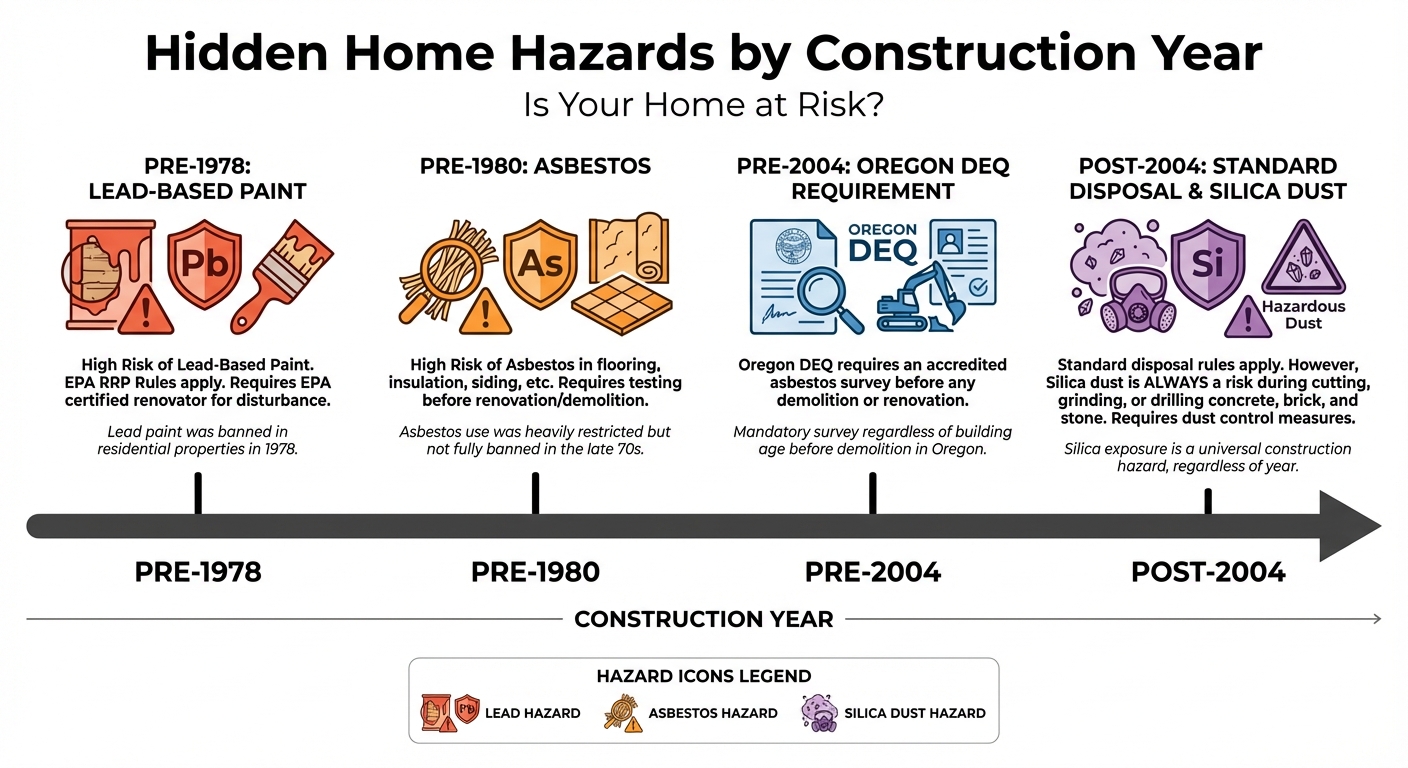
This infographic shows the likelihood of encountering different hazardous materials based on your home’s construction year. As you can see, homes in Portland’s charming historic neighborhoods—the ones with character and craftsman details—are also the ones most likely to contain these dangerous substances.
Lead Paint: A Neurotoxin Hiding in Plain Sight
If your Portland or Vancouver home was built before 1978, there’s a very high chance it contains lead-based paint. This isn’t just an academic concern—disturbing just one square foot of lead paint during demolition can create enough dust to poison a child.
Lead is a potent neurotoxin that’s especially dangerous for young children, whose developing brains are extremely vulnerable to its effects. The EPA enforces strict Renovation, Repair, and Painting (RRP) rules that require contractors to use specific containment and cleanup procedures when working on pre-1978 homes. But here’s the catch: those rules don’t apply to DIY homeowners, who often lack the training and equipment to contain lead dust properly.
When you sand that old windowsill or scrape away layers of vintage paint, you could be creating invisible lead dust that settles on floors, countertops, and furniture—places where children play and eat.
Asbestos: A Legal and Health Nightmare
Asbestos is the renovation hazard that keeps contractors up at night—and for good reason. This naturally occurring mineral was used extensively in building materials until the 1980s because of its heat resistance and durability. The problem? When disturbed, it releases microscopic fibers that, when inhaled, can cause mesothelioma and other deadly cancers decades later.
In Oregon, the Department of Environmental Quality (DEQ) doesn’t mess around with asbestos. They require an accredited asbestos survey before demolition activities in structures built before January 1, 2004 (though homes built before 1980 carry the highest risk). This isn’t just a suggestion—it’s the law.
If you improperly handle or dispose of asbestos-containing materials, you could face fines up to $25,000 per day of violation. Washington State has similarly strict regulations, and transfer stations in both states may refuse to accept your debris without proper testing documentation.
The Hidden Cost of “Saving Money”: Injuries, Back Pain, and Emergency Room Visits
Even if you’re lucky enough to have a renovation project free of toxic materials, the physical act of hauling debris is far more dangerous than most homeowners realize.
Your Back Wasn’t Designed for This
The National Safety Council identifies “Overexertion” as one of the leading causes of work-related injuries. Professional construction workers—people who lift heavy materials for a living—receive training in proper biomechanics and lifting techniques. They know how to engage their core, protect their spine, and recognize when a load is too heavy for one person.
You probably don’t have that training.
Moving a cast iron bathtub, carrying stacks of old lumber, or hauling bags of broken tile might not seem like a big deal until you feel that sharp twinge in your lower back. Acute lumbar strain, herniated discs, and chronic back pain are common results of DIY debris removal—injuries that can sideline you for weeks and result in expensive medical bills that far exceed what you would have paid for professional hauling.
Sharp Objects and Serious Injuries
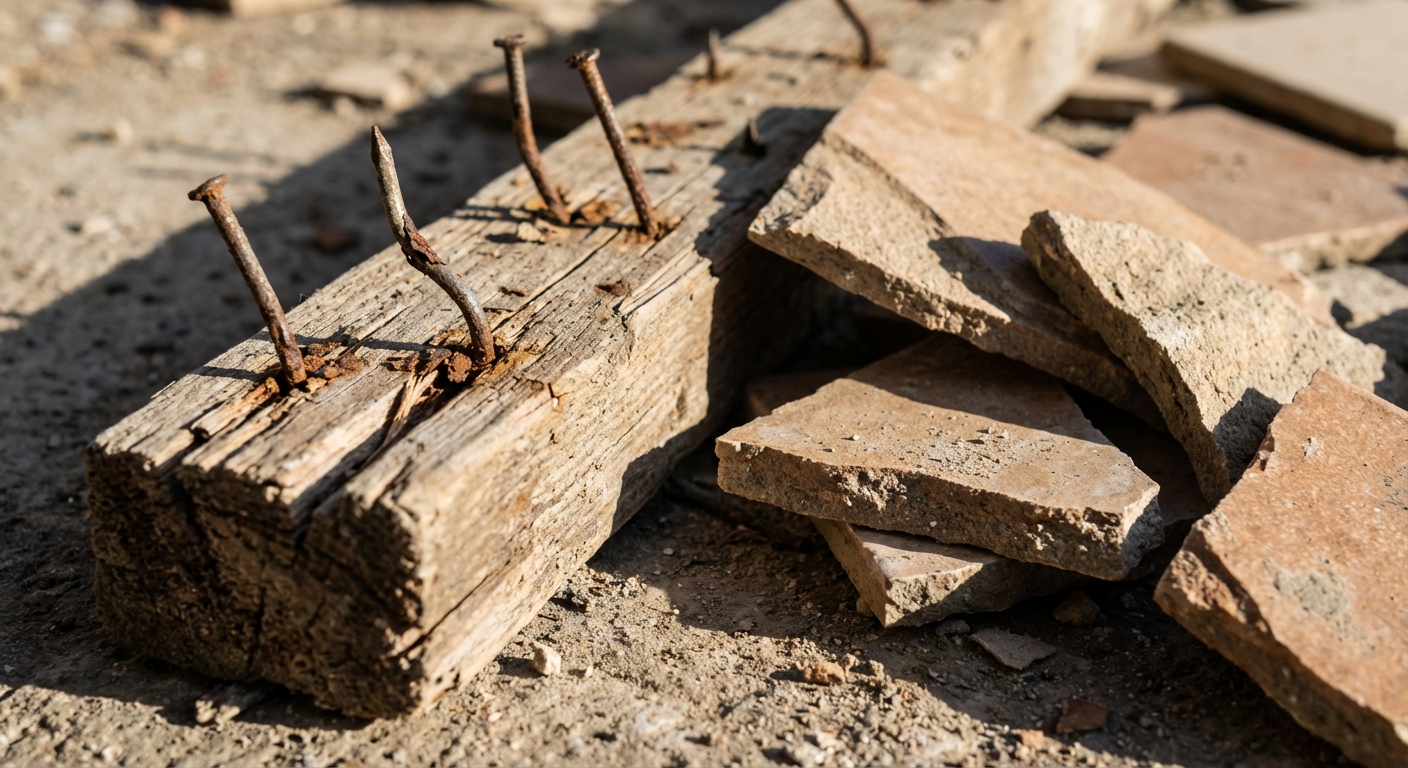
Renovation debris is essentially a minefield of sharp hazards. Old lumber bristles with rusty nails. Broken tile and glass create jagged edges. Splintered wood can pierce skin and clothing. These “sharps” pose a high risk for lacerations, puncture wounds, and tetanus infections.
Professional junk removal crews come equipped with heavy-duty gloves, steel-toed boots, and the training to safely handle dangerous debris. They know how to stack materials to avoid collapse, how to carry awkward loads without injury, and how to protect themselves from the constant barrage of sharp edges and protruding nails that characterize demolition waste.
Vehicle Damage and Road Hazards
Think your pickup truck can handle that load of old concrete and roofing materials? Maybe—but it might not be the same afterward. Overloading a personal vehicle with heavy debris can damage suspension systems, blow out tires, and create dangerous driving conditions on I-5 or Highway 26.
And don’t forget about the multiple trips you’ll need to make to the transfer station. These facilities often have long lines, limited hours, and strict load size limits. What you thought would be a quick Saturday morning errand can easily consume your entire weekend.
Portland’s C&D Waste Rules Are No Joke—Here’s What You Need to Know
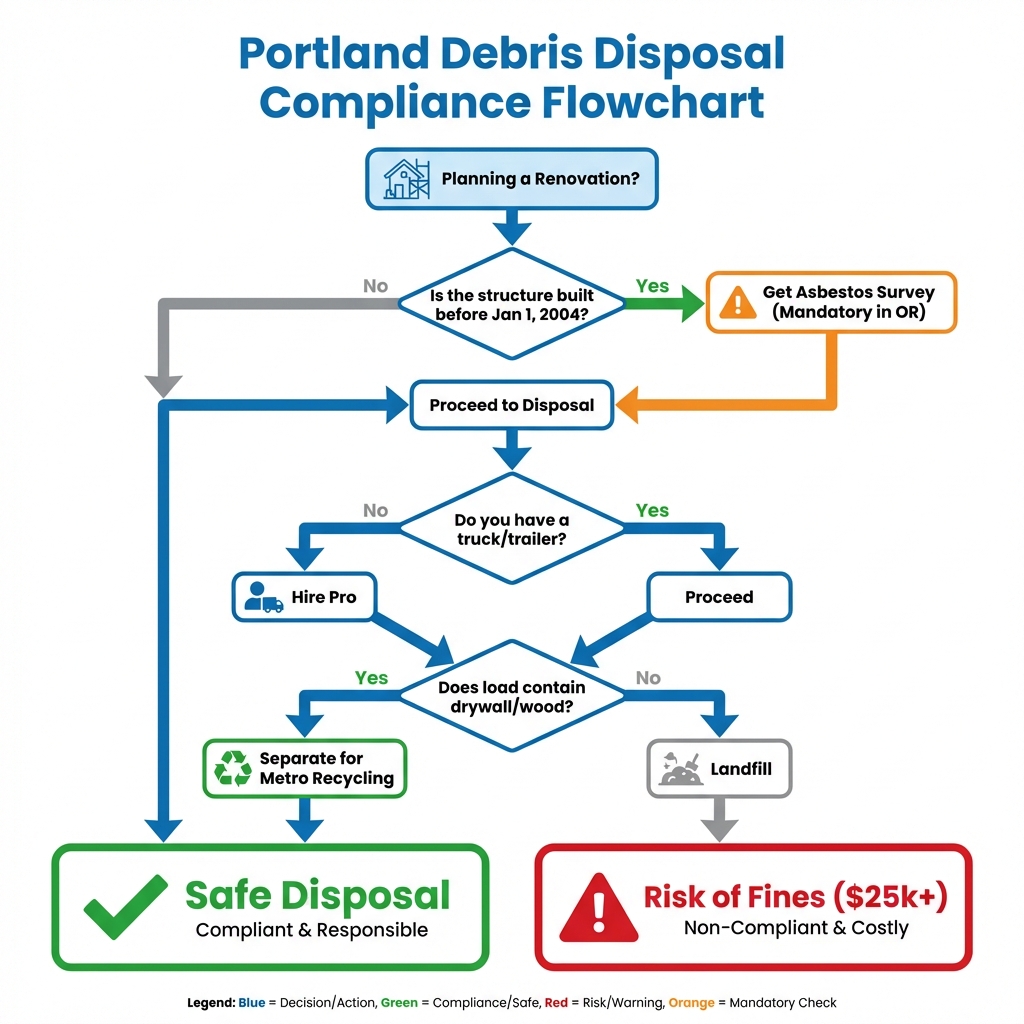
This flowchart breaks down the decision points you’ll face when disposing of construction debris in Portland. As you can see, the process is far more complex than simply “throw it in a dumpster and forget about it.”
Metro’s Recycling Mandates
Portland’s regional government, Metro, doesn’t just suggest recycling—they require it. Specific construction materials must be separated for recycling rather than sent to landfills. This includes:
- Drywall: New construction drywall scraps must often be separated
- Clean wood: Untreated lumber can be recycled into mulch or biomass fuel
- Scrap metal: Copper pipes, steel beams, and metal fixtures are valuable recyclables
Professional junk removal services like Smart Junk Removal PDX are integrated into this recycling ecosystem. We know which materials go where, which facilities accept specific types of debris, and how to properly sort your waste to maximize diversion from landfills. For a DIY renovator at a transfer station, this sorting can be confusing, time-consuming, and easy to get wrong.
The Asbestos Testing Maze
We touched on asbestos earlier, but it’s worth emphasizing just how complex the disposal process is:
In Oregon, the DEQ requires an asbestos survey for residential demolition projects in structures built before January 1, 2004. If asbestos is found, it must be handled by certified professionals and disposed of at approved facilities. Mess this up, and you’re looking at fines exceeding $25,000 per day of violation.
In Washington State, homeowners hauling their own waste must provide proof of asbestos testing at transfer stations. Show up without documentation, and your entire truckload may be rejected—meaning you’ve wasted hours of work and still need to find a legal disposal solution.
The Dumpster Permit Headache
Renting a dumpster seems like a straightforward solution, right? Just have a big metal bin delivered, fill it up over the course of your project, and have it hauled away.
Not so fast. If you need to place that dumpster on a public street in Portland (which is common if your driveway is full or too small), you’ll need a Street Use Permit from the Portland Bureau of Transportation (PBOT). This adds anywhere from $50 to $200+ to your total cost, plus the time and hassle of navigating city bureaucracy.
Even if you have room in your driveway, heavy dumpsters can crack concrete, damage landscaping, or sink into soft ground. And here’s something most people don’t anticipate: unauthorized dumping. An open dumpster sitting on your property for days or weeks becomes a magnet for neighbors or passersby who see it as a convenient place to dump their own junk. You could end up paying disposal fees for someone else’s trash.
The True Cost Comparison: Time, Safety, and Hidden Fees
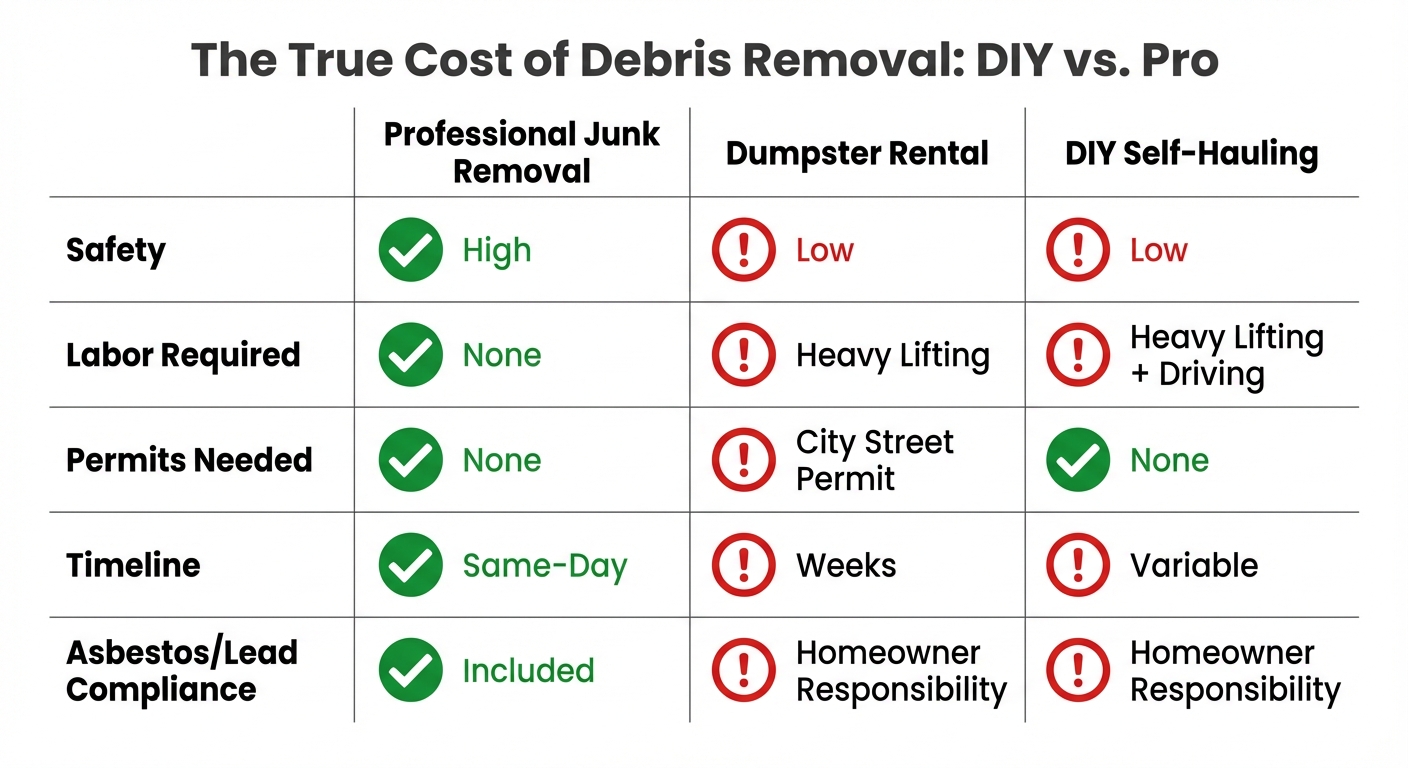
This comparison reveals the true costs of each disposal method when you factor in labor, permits, time, and injury risk. Let’s break down each option in detail.
Dumpster Rental: The “Convenient” Trap
Typical Cost: $350-$500 (base rental)
At first glance, dumpster rental seems like the middle ground between DIY and professional removal. But once you add up all the costs and inconveniences, it’s rarely the bargain it appears to be:
- Street Use Permit: $50-$200+ (required in Portland if the dumpster blocks the right-of-way)
- Labor: You still have to carry every piece of debris from inside your home to the dumpster, risking all the physical injuries we discussed earlier
- Property Damage: Heavy dumpsters can crack driveways; you may be charged for repairs
- Timeline: The dumpster sits on your property for days or weeks, taking up parking space and creating an eyesore
- Unauthorized Dumping: Open dumpsters attract illegal dumping from neighbors and strangers
- Landfill Destination: Unless you rent a specialized “clean fill” bin, most dumpster loads go straight to the landfill, missing valuable recycling opportunities
Total Reality Check: $425-$700 + 6-8 hours of physical labor + significant injury risk
DIY Self-Hauling: The “Budget” Gamble
Apparent Cost: $0 (if you own a truck) to $100 (if you rent one)
DIY hauling seems like the cheapest option—until you factor in everything else:
- Time Investment: Multiple trips to the transfer station, often during limited operating hours (bye-bye, weekend)
- Transfer Station Fees: $30-$100 per load, depending on weight and material type
- Vehicle Wear and Tear: Suspension damage, tire wear, potential transmission strain
- Fuel Costs: At current Portland gas prices, multiple trips add up fast
- Manual Sorting: You must personally sort materials for recycling and provide asbestos testing documentation
- Injury Risk: Highest risk category for back injuries, cuts, and overexertion
Hidden Reality: $100-$300 + 8-12 hours of your time + maximum injury exposure + highest stress level
Professional Junk Removal: The Smart Choice
Typical Cost: $400-$600 for a standard renovation’s debris
Here’s what you actually get for that price:
- Zero Labor: Our team does 100% of the loading, sweeping, and cleanup. You literally just point to what needs to go.
- Same-Day or Scheduled Service: We work on your timeline, not the transfer station’s limited hours
- No Permits Required: Our mobile trucks don’t block the right-of-way long-term, avoiding the whole permitting mess
- Integrated Recycling & Donation: We sort for donation (like Habitat for Humanity ReStore) and recycling, maximizing waste diversion
- Safety & Compliance: Our licensed, insured crews handle hazardous materials according to DEQ and EPA regulations
- Immediate Property Clearance: No dumpster sitting in your driveway for weeks
True Value: $400-$600 + 0 hours of your labor + zero injury risk + complete peace of mind
When you factor in the value of your time, the cost of potential injuries, and the risk of regulatory violations, professional removal isn’t just safer—it’s often actually cheaper than the “budget” alternatives.
Beyond Convenience: The Environmental and Health Case for Professional Haulers
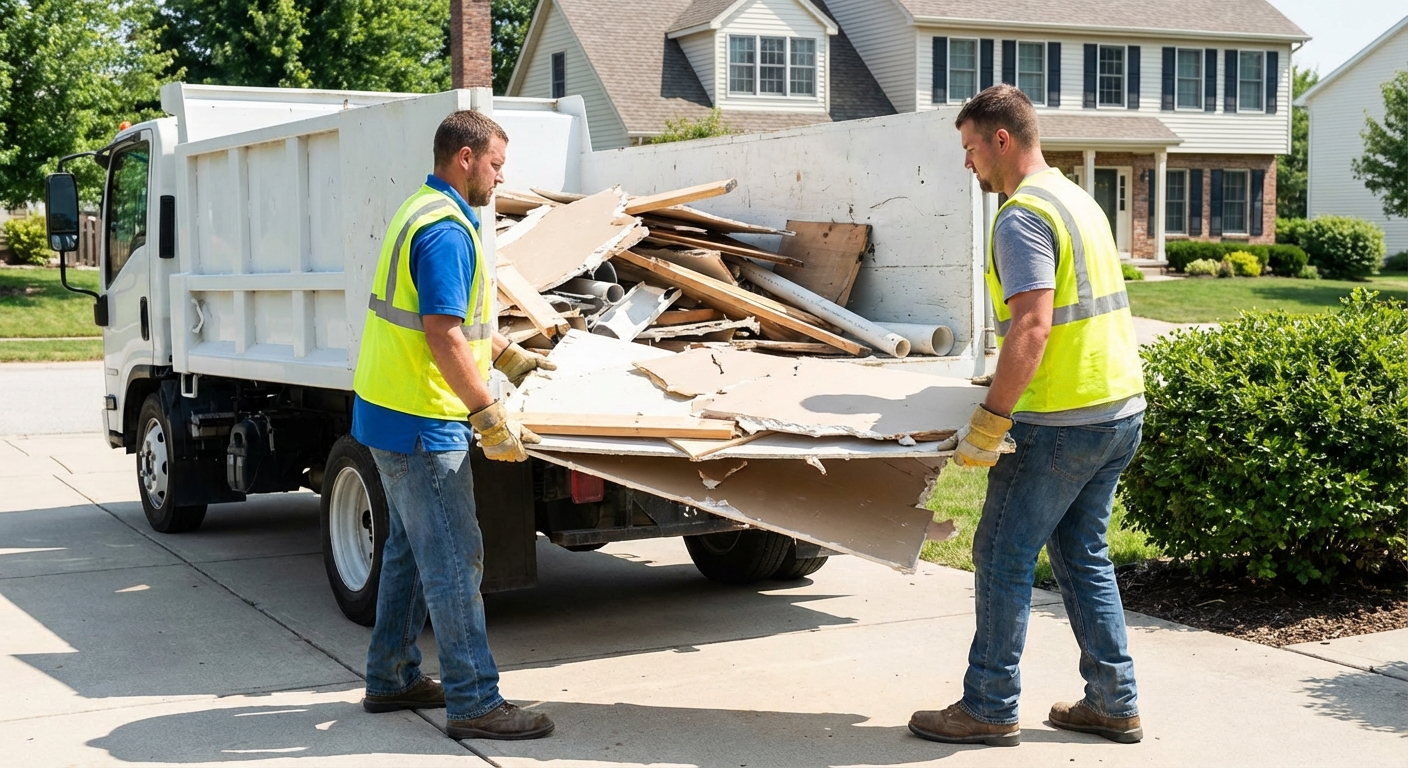
For Portland homeowners who care about sustainability—and let’s be honest, that’s most of us—professional junk removal offers environmental benefits that go far beyond convenience.
The Scale of the Problem
The EPA estimates that 600 million tons of construction and demolition debris were generated in the United States in 2018. That’s more than double the amount of regular household trash produced in the same year. Without responsible disposal and recycling practices, this massive waste stream would overwhelm our landfills and squander valuable resources.
Professional Haulers as Circular Economy Facilitators
When you hire Smart Junk Removal PDX, you’re not just getting rid of debris—you’re participating in Portland’s circular economy. Here’s how:
Donation Programs: Those old kitchen cabinets you’re replacing? They might be perfect for a family working with Habitat for Humanity to build their first home. That vintage door with the original hardware? A renovator’s treasure. We have relationships with local organizations that give usable materials a second life instead of sending them to the landfill.
Material Recycling:
- Concrete and brick are crushed into base material for new construction projects
- Wood is chipped into mulch or processed into biomass fuel
- Scrap metal is melted down and reformed into new products
- Clean drywall is recycled into new wallboard or used as a soil amendment
Professional haulers have the relationships, volume, and expertise to access these specialized recycling streams. When individual homeowners show up at transfer stations, they often lack access to the specific recycling bunkers and face confusing signage about what goes where. The result? Materials that could have been recycled end up in the landfill.
Protecting Your Family from Toxic Exposure
This might be the most important benefit of all. Professional crews receive training in hazardous material handling. We know how to:
- Identify potentially hazardous materials before disturbing them
- Use proper containment procedures to prevent dust spread
- Wear appropriate PPE (respirators, protective clothing, gloves)
- Dispose of regulated materials at approved facilities
- Maintain compliance with DEQ, EPA, and OSHA regulations
When you hire Smart Junk Removal PDX, you’re not just protecting your back—you’re protecting your family from neurotoxic lead exposure, carcinogenic asbestos fibers, and lung-damaging silica dust. That’s especially critical if you have young children in the home, whose developing bodies are far more vulnerable to these toxins.
Key Takeaways
Your home renovation should be exciting, not hazardous. While the DIY spirit that makes Portland unique is admirable, construction debris disposal is one area where professional help isn’t a luxury—it’s a critical investment in your family’s safety and your community’s environmental health.
Remember these key points:
- Renovation debris contains serious health hazards like silica dust, lead paint, and asbestos that require professional handling to protect your family
- DIY disposal and dumpster rentals expose you to injury risk, regulatory fines, and hidden costs that often exceed the price of professional removal
- Portland and Washington State have strict C&D waste regulations with penalties up to $25,000 for violations
- Professional services like Smart Junk Removal PDX provide full-service debris removal, ensure compliance with all Metro and DEQ regulations, and maximize recycling and donation opportunities
- When you factor in time, safety, and peace of mind, professional removal is often the most cost-effective option
Ready to Tackle Your Renovation the Smart Way?
Don’t let debris disposal become the nightmare part of your dream renovation. Smart Junk Removal PDX provides safe, eco-friendly construction debris removal throughout the Portland Metro and Vancouver areas. Our experienced crews handle everything from drywall and flooring to bathroom fixtures and roofing materials—all while ensuring maximum recycling and complete regulatory compliance.
Contact Smart Junk Removal PDX today for a free quote at smartjunkremovalpdx.com/contact or call 503-517-8045. Let us handle the heavy lifting so you can focus on transforming your home.
References:
- Occupational Safety and Health Administration (OSHA). Silica, Crystalline – Overview. https://www.osha.gov/silica-crystalline
- United States Environmental Protection Agency (EPA). Lead-Safe Renovation, Repair and Painting Program. https://www.epa.gov/lead/renovation-repair-and-painting-program-operators
- Oregon Department of Environmental Quality (DEQ). Asbestos Information for Homeowners. https://www.oregon.gov/deq/Hazards-and-Cleanup/Pages/Asbestos-for-Homeowners.aspx
- National Safety Council (NSC). Top Work-Related Injury Causes. https://injuryfacts.nsc.org/work/work-overview/top-work-related-injury-causes/
- Metro. Construction and demolition waste recycling requirements. https://www.oregonmetro.gov/tools-for-living/garbage-and-recycling/construction-and-demolition-waste
- Oregon.gov. Understanding Asbestos Regulations. https://www.oregon.gov/deq/Hazards-and-Cleanup/Pages/Asbestos-Information.aspx
- Washington State Department of Labor & Industries. Asbestos General Information. https://lni.wa.gov/safety-health/safety-topics/topics/asbestos
- City of Portland, Portland Bureau of Transportation. Permits for Temporary Street Use. https://www.portland.gov/transportation/permitting/temporary-street-use-permitting
- The Center for Construction Research and Training (CPWR). Musculoskeletal Disorders in Construction. https://www.cpwr.com/research/data-center/data-dashboards/musculoskeletal-disorders-in-construction/
- United States Environmental Protection Agency (EPA). Sustainable Management of Construction and Demolition Materials. https://www.epa.gov/smm/sustainable-management-construction-and-demolition-materials