
Table of Contents
- Portland’s “Bulky Waste” Rules: What Every Homeowner Needs to Know
- Senate Bill 1576: How Oregon Is Revolutionizing Mattress Recycling
- From Landfill Nightmare to Recycling Success: The Hidden Value in Your Old Mattress
- The Hidden Price Tag: Why DIY Mattress Disposal Often Costs More Than You Think
- Your Mattress Disposal Action Plan: Practical Steps for Portland Homeowners
- Final Thoughts
When it’s time to replace your worn-out mattress, the assumption seems simple: drag it to the curb and let the garbage truck handle it. Unfortunately, in Portland, that approach could land you with hefty fines and contribute to the city’s illegal dumping crisis. Portland’s commitment to environmental sustainability comes with strict regulations around “bulky waste” items like mattresses, making proper disposal far more complex than most residents realize.
The disconnect between disposal difficulty and recycling potential represents both a challenge and an opportunity for Portland homeowners. With Oregon’s recent passage of Senate Bill 1576 establishing a mattress stewardship program, the landscape is evolving—but current disposal still requires navigating a maze of regulations, fees, and logistics. This guide breaks down everything Portland residents need to know about legally and responsibly disposing of mattresses, comparing DIY approaches with professional removal services, and understanding why this seemingly simple task has become so complicated.
Portland’s “Bulky Waste” Rules: What Every Homeowner Needs to Know
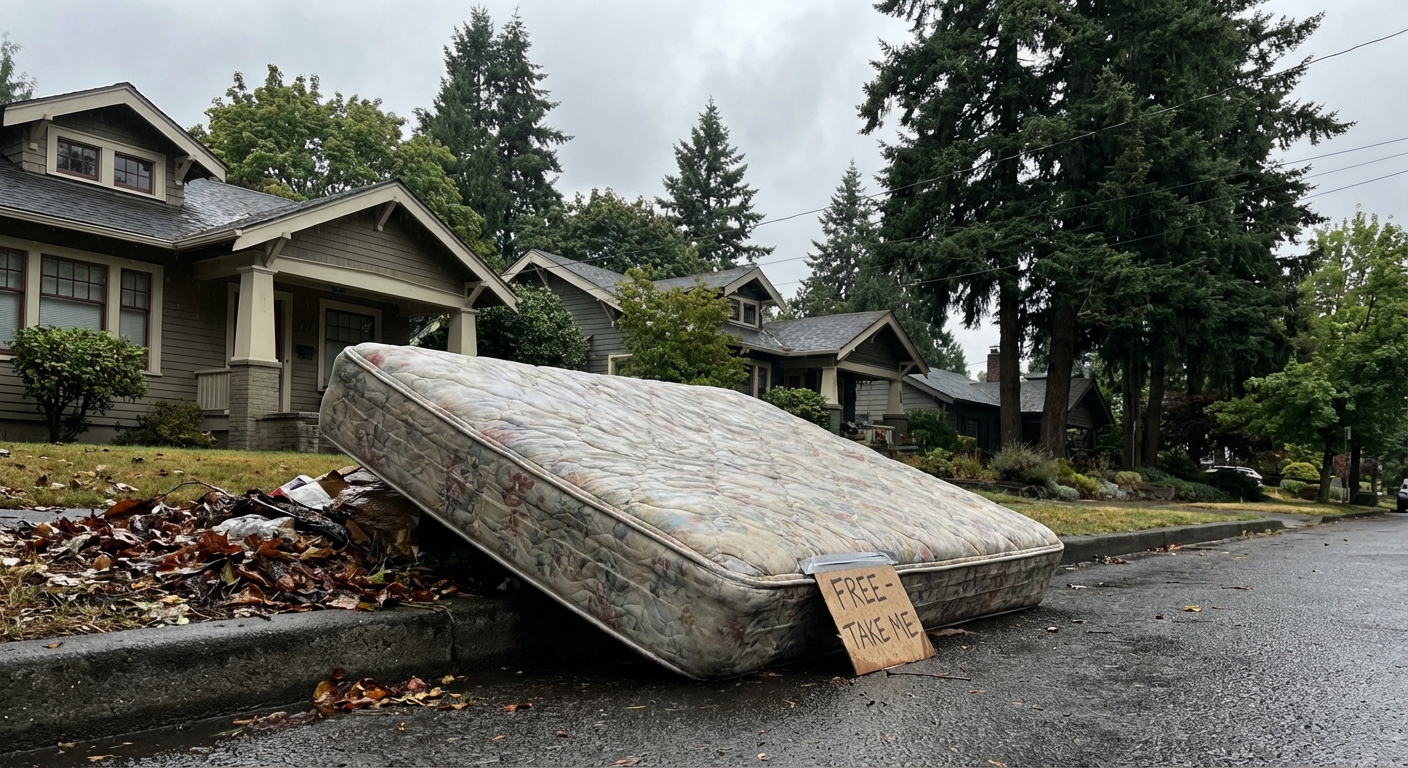
Understanding Portland’s specific regulations around mattress disposal is critical to avoiding violations and contributing to the city’s sustainability goals. The reality is far different from what many new Portland residents expect based on their experiences elsewhere. The City of Portland Bureau of Planning and Sustainability categorizes mattresses as “Bulky Waste,” requiring special scheduling and fees beyond standard garbage collection. You cannot simply place a mattress curbside on your regular collection day and expect it to disappear. Instead, residents must contact their specific hauler weeks in advance to arrange pickup, with additional charges typically ranging from $25-50 or more per item. Simply placing a mattress curbside without scheduling constitutes improper disposal and may result in code violations. The Metro RID Patrol actively investigates illegal dumping, with fines ranging from hundreds to thousands of dollars depending on volume and location. The perception gap is real: many new Portland residents assume mattress disposal works like it did in their previous cities, leading to unintentional violations that carry serious financial consequences.
Historical data shows mattresses consistently rank among the top illegally dumped items in the Metro region, creating significant cleanup costs for taxpayers. The Metro RID Patrol cleans up thousands of campsites and illegal dumps annually, many containing mattresses that residents didn’t know how to dispose of properly. These cleanup operations divert public resources from other critical services and highlight the need for better public education around bulky waste disposal. The proper disposal process requires several steps:
- Identify your registered hauler from your monthly bill
- Call to schedule a bulky item pickup at least two weeks in advance
- Pay the additional fee
- Ensure the mattress is accessible on the scheduled date
Senate Bill 1576: How Oregon Is Revolutionizing Mattress Recycling
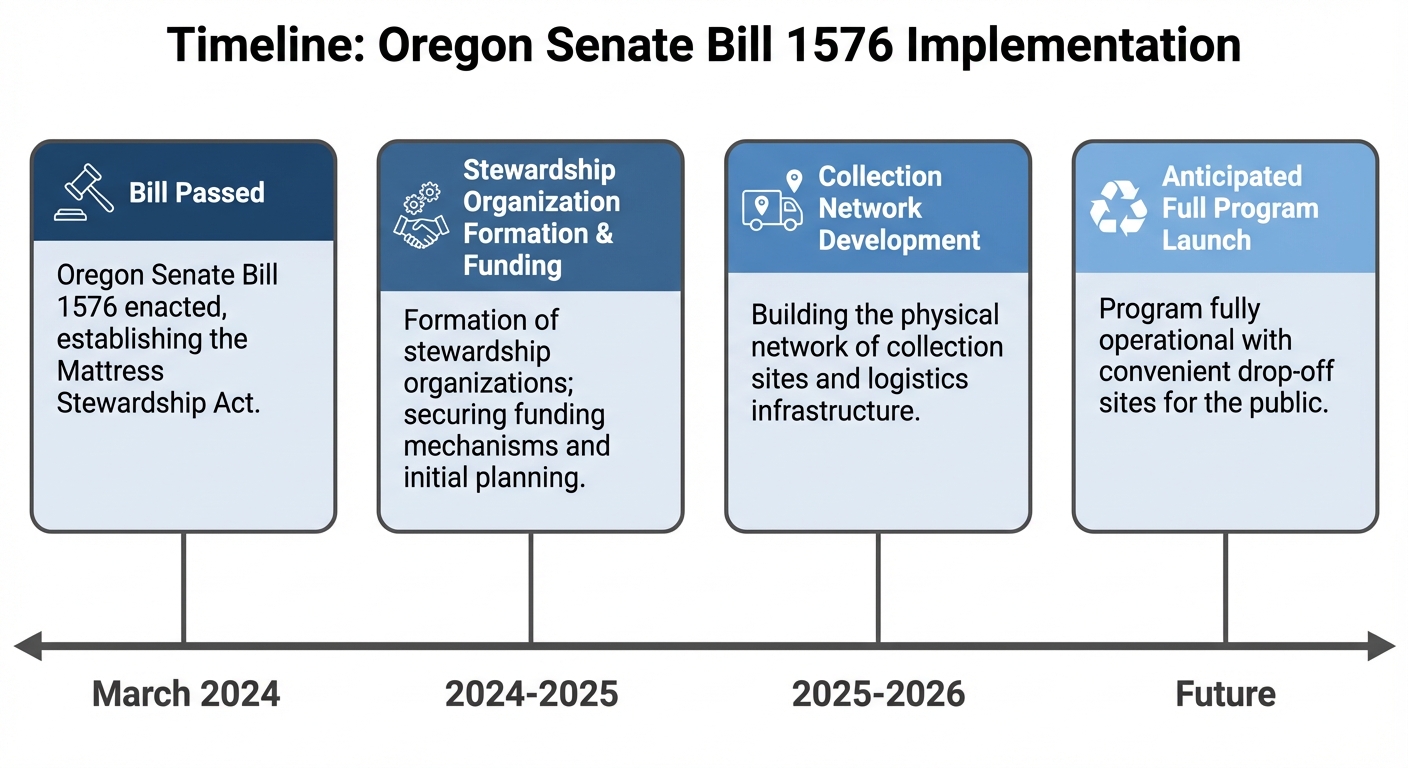
Recent legislation signals a major shift in how Oregon handles mattress disposal, though full implementation will take time. Senate Bill 1576, passed in March 2024, establishes Oregon’s first mattress stewardship program modeled after successful programs in California, Connecticut, and Rhode Island. The legislation shifts responsibility from consumers and local governments to mattress producers, who must fund and manage collection and recycling infrastructure. This producer responsibility model recognizes that the companies profiting from mattress sales should bear the cost of end-of-life management rather than placing that burden on taxpayers and municipal waste systems.
Program Goals and Vision
Program goals include creating a statewide network of convenient drop-off locations and significantly increasing recycling rates. The vision is for Portland residents to have access to multiple free or low-cost drop-off sites throughout the metro area, eliminating the current barriers that lead to illegal dumping. The program will also establish standards for recycling facilities to ensure maximum material recovery from each mattress. Timeline considerations are important: while the bill has passed, full implementation of the stewardship organization and collection network will take 18-24 months, leaving current disposal methods unchanged in the short term. The law requires mattress producers to form or join a stewardship organization, which must then develop a comprehensive collection and recycling plan for state approval before launching operations.
California’s Success Story
California’s program operates over 200 collection sites statewide, making proper disposal convenient for nearly all residents. This proven model provides Oregon with a roadmap for successful implementation. What this means for Portland residents: eventual access to free or low-cost drop-off locations, but continued reliance on current disposal methods until infrastructure is built. In the meantime, residents should continue using scheduled hauler pickups, Metro transfer stations, or professional removal services like Smart Junk Removal to ensure their mattresses are disposed of legally and recycled properly.
From Landfill Nightmare to Recycling Success: The Hidden Value in Your Old Mattress
Mattresses pose unique challenges in landfills while simultaneously offering exceptional recycling potential—understanding this paradox explains why Portland takes disposal so seriously.
The Landfill Problem
The landfill problem stems from mattress construction and composition. Steel springs wrap around and damage expensive compaction equipment, causing operational downtime that costs facilities thousands of dollars per incident. Landfill operators consider mattresses among the most problematic items they handle because the springs can jam machinery and require manual removal. The high void ratio means mattresses occupy 400% more landfill space than their weight suggests. A 100-pound mattress doesn’t compact down to a manageable size—instead, it maintains its bulky shape, consuming valuable landfill volume that could accommodate much more waste if the mattress were properly recycled instead. The “buoyancy” effect causes mattresses to resurface, creating long-term management challenges. Even when buried under layers of other waste, mattresses have a tendency to work their way back to the surface over time, requiring additional handling and potentially exposing springs and other components that create safety hazards.
Recycling Potential
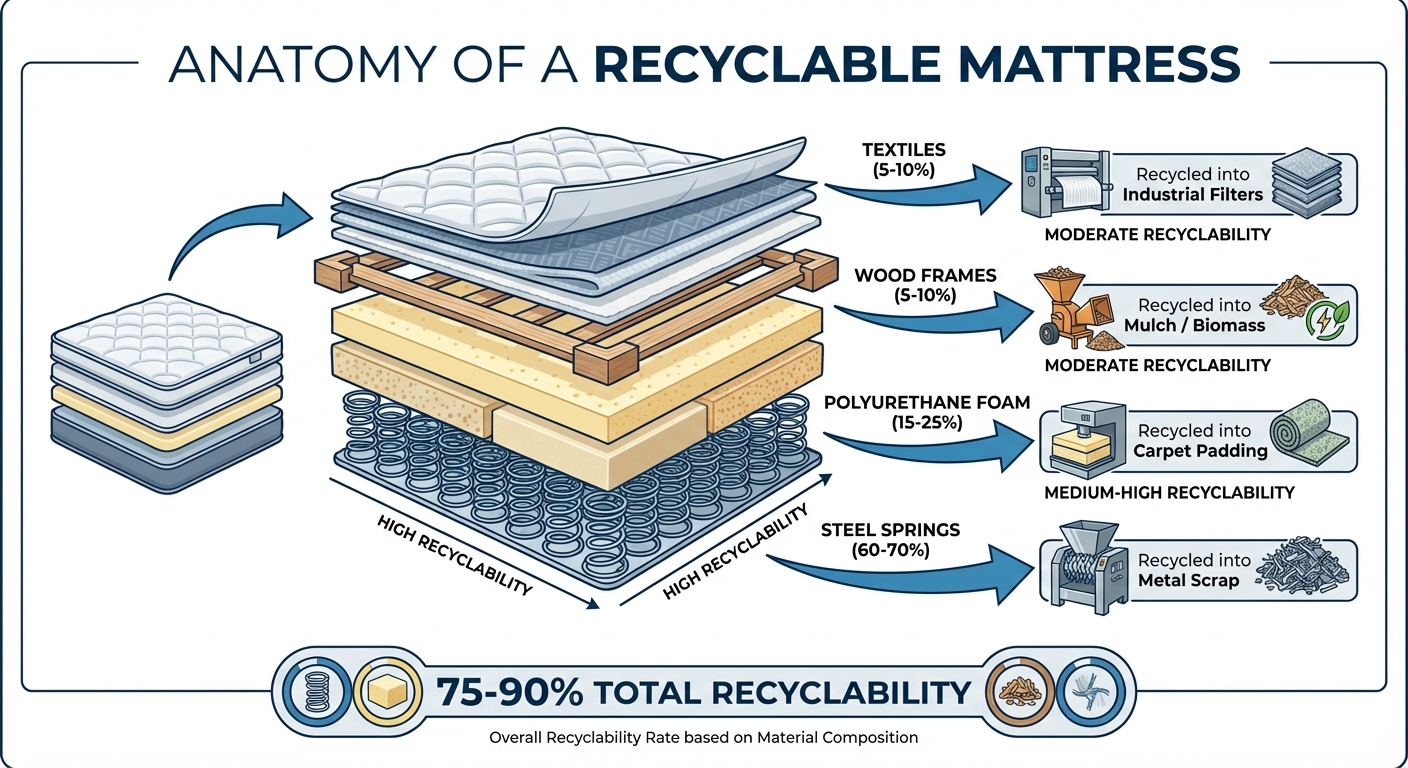
Recycling potential tells a much more optimistic story. Despite disposal challenges, mattresses are resource goldmines. 75-90% of mattress materials are recyclable by weight, making them one of the most recyclable household items when processed properly. What happens to recycled mattress components:
- Steel springs become scrap metal for construction materials and appliances. The metal content alone in a typical innerspring mattress weighs 20-40 pounds and has significant commodity value.
- Polyurethane and latex foam transforms into carpet padding, animal bedding, or fuel blends. Foam recycling technology has advanced significantly, allowing even older, degraded foam to find second-life applications.
- Wood frames convert to mulch, biomass fuel, or particle board. The hardwood typically used in mattress frames is too valuable to waste in landfills.
- Cotton and synthetic fabrics repurpose as industrial filters or insulation. The textile component, while representing a smaller percentage of total mattress weight, still offers recycling value.
Environmental Impact
These savings come from avoiding both the landfill space consumption and the energy-intensive production of virgin materials to replace what could have been recycled. Portland’s commitment to circular economy principles makes mattress recycling a municipal priority, not just an environmental nice-to-have. The city’s ambitious climate action goals require reducing waste at every opportunity, and mattresses represent a significant opportunity due to their high recyclability and the large number discarded annually as residents upgrade their sleep systems.
The Hidden Price Tag: Why DIY Mattress Disposal Often Costs More Than You Think
Breaking down the actual costs and complications of self-disposal reveals why professional services often provide better value than homeowners initially assume.
The DIY Approach Challenges
The DIY approach challenges begin with the transportation barrier: Queen and King mattresses don’t fit in standard vehicles, requiring truck or trailer rental at $50-100 per day. Most passenger cars and even many SUVs cannot accommodate a mattress safely or legally. Attempting to strap a mattress to a roof rack creates dangerous driving conditions and potential legal liability if the mattress comes loose. Physical safety risks are significant:
- Mattresses weigh between 60-150 pounds depending on size and construction
- They’re awkward to grip and maneuver, especially around corners, down stairs, or through doorways
- Injury from improper lifting technique or property damage from scraping door frames and walls are common DIY disposal pitfalls
Metro transfer station fees include minimum transaction fees plus potential bulky item surcharges for spring-containing items. As of 2024, even if you successfully transport your mattress to a Metro facility, you’ll pay a base fee that often starts around $35, with additional charges possible depending on the facility’s specific pricing structure. The time investment is substantial: renting a vehicle, loading the mattress, driving to a facility often 30+ minutes from residential areas, waiting in line, unloading, and returning the rental can easily consume 3-4 hours. For working professionals, this often means sacrificing weekend time or taking time off work.
Hidden DIY Costs Breakdown
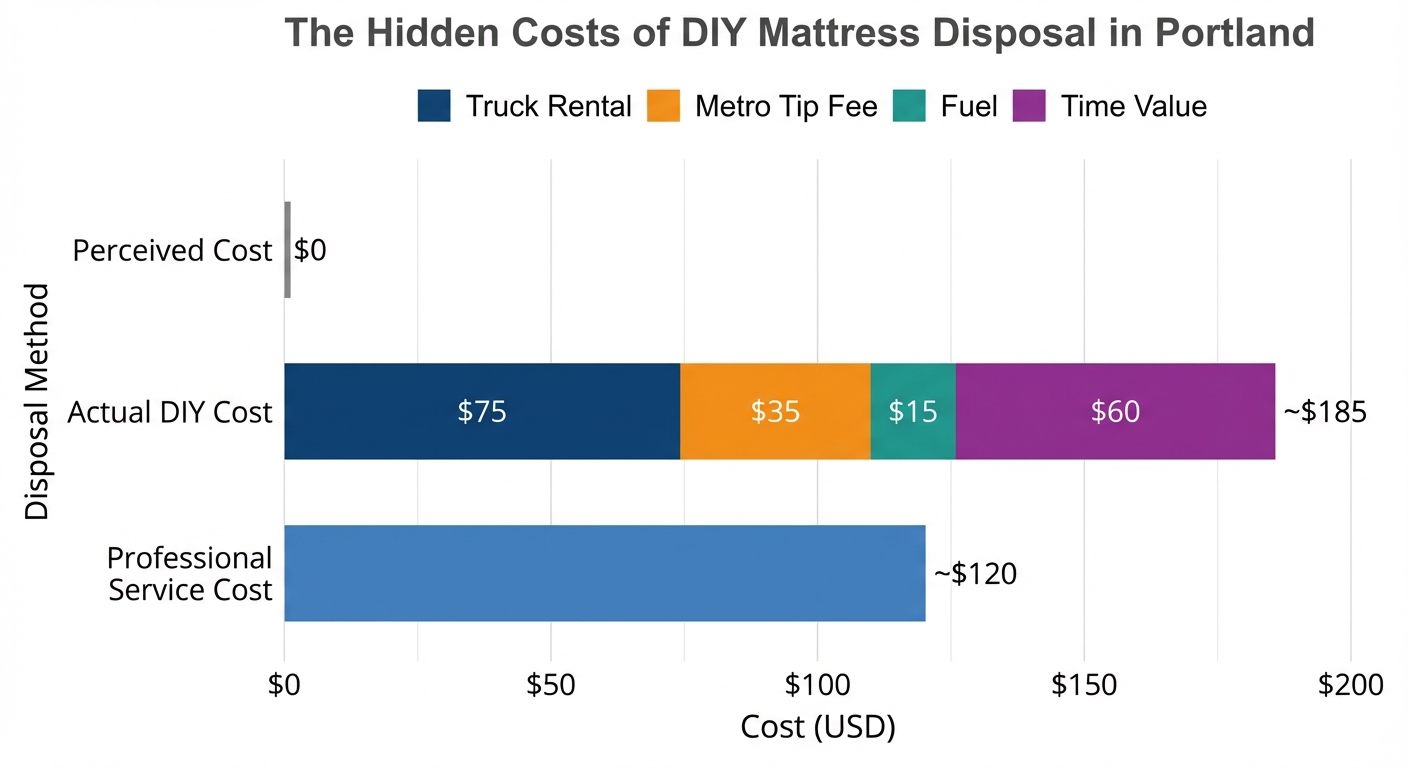
Hidden DIY costs breakdown reveals the true expense:
| Expense Category | Cost Range |
|---|---|
| Truck rental | $50-100 |
| Fuel for round trip | $10-20 |
| Transfer station fees | $35-50+ |
| Time value (3-4 hours at minimum wage) | $45-60 |
| TOTAL ACTUAL COST | $140-230 |
This doesn’t account for intangible costs like physical strain, stress of navigating unfamiliar facilities, or the risk of doing it wrong and facing fines. The perceived savings of DIY disposal often evaporate under honest cost accounting.
Professional Removal Value Proposition
Professional removal value proposition becomes clear when compared honestly to DIY costs:
- Flat-rate pricing typically $80-150 for single mattress pickup—often less than the true cost of DIY disposal
- Licensed haulers maintain Metro registration ensuring regulatory compliance
- Guaranteed routing to certified recycling facilities maximizes material recovery
- Carbon footprint efficiency through consolidated collection routes
- Physical labor and liability handled by insured professionals
When you hire a professional service, you’re not just paying for labor—you’re paying for their knowledge of regulations, established relationships with disposal facilities, and proper insurance coverage protecting both parties. Your mattress is far more likely to be properly recycled when handled by professionals than when dropped at a transfer station by a first-time user. Convenience factor cannot be overstated: scheduled pickup at your door eliminates all logistical burden. You point to the mattress, the professionals do the rest, and you get on with your day. For most Portland residents, this convenience alone justifies the modest cost difference between true DIY expenses and professional service. Smart Junk Removal’s model bridges the gap between consumer convenience and Portland’s strict environmental standards. By handling all aspects of collection, transport, and proper disposal while maintaining full regulatory compliance, professional services serve as essential infrastructure in Portland’s waste management ecosystem.
Your Mattress Disposal Action Plan: Practical Steps for Portland Homeowners
Until Oregon’s stewardship program is fully implemented, residents need clear guidance on current best disposal practices. Here’s your actionable roadmap for handling mattress disposal right now.
Immediate Disposal Options
Immediate disposal options include several viable pathways:
- Schedule bulky waste pickup with your registered hauler by calling the contact information on your monthly bill. Most Portland haulers offer this service, though advance scheduling of 1-2 weeks is typically required.
- Transport to Metro transfer stations yourself if you have appropriate vehicle access. The main facilities accepting mattresses are Metro Central in Northwest Portland and Metro South in Oregon City. Call ahead to confirm current hours and any temporary restrictions before loading up.
- Hire a licensed professional junk removal service and verify Metro registration. Services like Smart Junk Removal handle all aspects from pickup to proper disposal.
- Check for occasional Metro-sponsored community cleanup days, though these have capacity limitations and shouldn’t be your primary disposal plan.
What to Avoid
- Never place mattresses curbside without confirmed pickup scheduling
- Don’t attempt to break down mattresses for regular garbage—springs create serious safety hazards for sanitation workers
- Avoid unlicensed “cheap” haulers who may illegally dump, creating environmental harm and potential legal liability
Questions to Ask Professional Services
Questions to ask professional services include critical verification points:
- “Are you Metro-registered and licensed?” Legitimate services will readily provide this information.
- “Where will my mattress be taken?” Verify they’re routing to certified recycling facilities rather than just the nearest dumpster.
- “What percentage of the mattress will be recycled?” Reputable services track their recycling rates and can provide general figures.
- “Is pricing flat-rate or variable based on access difficulty?” Understanding the pricing structure upfront prevents surprise charges.
Timing Considerations
Timing considerations affect both availability and cost:
- Plan mattress disposal 2-4 weeks before new mattress delivery to avoid storage issues. Nothing is worse than having your new mattress arrive while the old one is still taking up space because you didn’t schedule removal in time.
- Avoid peak moving seasons (May through September) when professional services have longer lead times and may charge premium rates for rush jobs.
Future Outlook
Future outlook offers hope for simpler disposal:
- As SB 1576 implementation progresses, expect free drop-off locations throughout the Metro area
- Reduced costs as producer-funded infrastructure develops—when mattress manufacturers fund the collection and recycling system, consumers won’t pay direct fees for disposal
- Simplified processes for consumers while maintaining environmental standards
Why Proper Disposal Matters
- Every properly recycled mattress diverts 75-90% of its materials from landfills
- Conserves natural resources through material recovery
- Reduces greenhouse gas emissions from virgin material production
- Helps Portland meet its ambitious sustainability goals
- Reduces the burden on Metro’s RID Patrol and cleanup crews
- Prevents the spread of blight associated with illegal dumping
Final Thoughts
Portland’s complex mattress disposal landscape reflects the city’s serious commitment to environmental stewardship and circular economy principles. What appears to be bureaucratic overreach is actually a carefully designed system preventing millions of pounds of recyclable materials from occupying valuable landfill space and causing operational damage. The 75-90% recycling potential in every mattress represents both an environmental opportunity and a municipal responsibility that Portland takes seriously. While Oregon’s new mattress stewardship program promises to streamline disposal in coming years, current residents must navigate existing regulations thoughtfully. The true cost comparison reveals that professional services like Smart Junk Removal often provide better value than DIY approaches when hidden expenses and time investment are calculated honestly. As Portland continues evolving toward zero-waste goals, mattress disposal serves as a microcosm of broader waste management challenges: balancing consumer convenience with environmental necessity, individual responsibility with systemic infrastructure, and short-term costs with long-term sustainability. By understanding and working within these regulations rather than against them, Portland homeowners contribute to the city’s progressive environmental legacy while ensuring their old mattresses become raw materials for tomorrow’s products rather than permanent landfill burdens.
Ready to Dispose of Your Mattress the Right Way?
Get fast, licensed, and environmentally responsible pickup that ensures maximum recycling and zero hassle.
References:
- City of Portland. (2024). Garbage, Recycling and Compost: Bulky Waste. https://www.portland.gov/bps/garbage-recycling/home-recycling/bulky-waste
- Oregon Metro. (2024). RID Patrol: Reporting Illegal Dumping. https://www.oregonmetro.gov/tools-living/garbage-and-recycling/rid-patrol
- Oregon State Legislature. (2024). SB 1576: Mattress Stewardship Act. https://olis.oregonlegislature.gov/liz/2024R1/Measures/Overview/SB1576
- Mattress Recycling Council. (2023). Why Recycle? Environmental Impact. https://mattressrecyclingcouncil.org/environmental-impact/
- Connecticut Department of Energy and Environmental Protection. (2023). Mattress Recycling Impact. https://portal.ct.gov/DEEP/Reduce-Reuse-Recycle/Mattress-Recycling
- Oregon Metro. (2024). Find a Garbage or Recycling Facility. https://www.oregonmetro.gov/tools-living/garbage-and-recycling/garbage-recycling-facilities
- CalRecycle. (2023). California Mattress Recovery and Recycling Program. https://calrecyle.ca.gov/mattresses/
- Oregon Metro. (2024). Neighborhood Cleanups. https://www.oregonmetro.gov/tools-living/garbage-and-recycling/neighborhood-cleanups